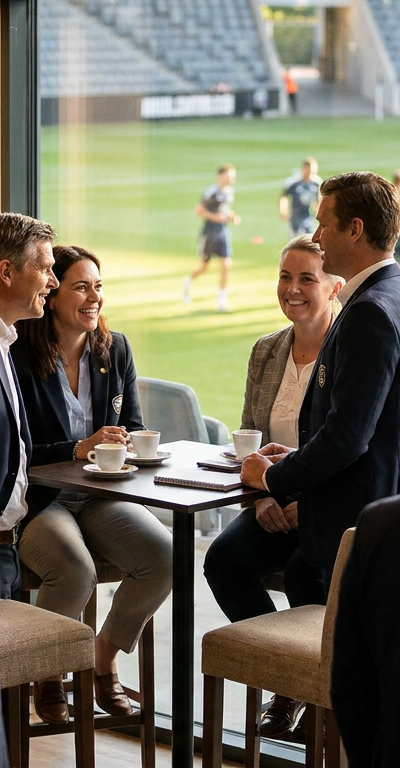
Value-Creating Networking for Sports Clubs: A Practical Guide
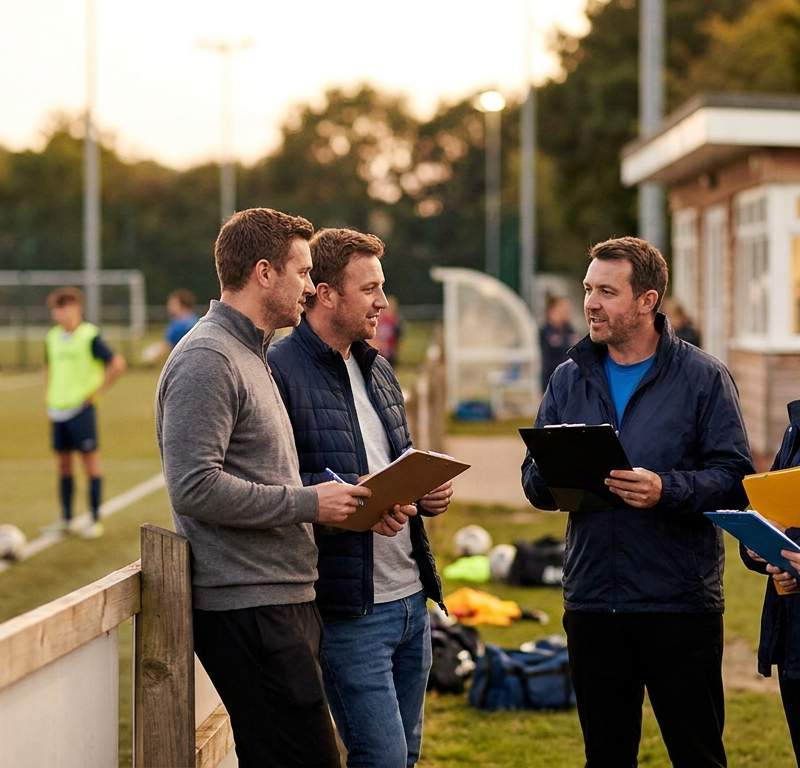
Many sports clubs make the mistake of confusing a cozy lunch with value-creating networking. Although the social aspect is the foundation, modern sponsors expect more than just a sausage and a cold beer. They expect concrete business opportunities, new leads, and a measurable return on their investment.
To transform the club's network from a cost into a profitable platform, a professional approach to facilitation is required. It is about moving from being a passive host to being an active matchmaker who understands the members' business models.
Organizing Matchmaking: Who is at the helm?
One of the biggest challenges in Danish sports clubs is the question of who actually facilitates the network. It is rarely a task that can be handled by a random volunteer or a young intern. Matchmaking requires insight into the local business community and the authority to steer the conversation.
Choosing a Facilitator Model
The club must choose a model that matches its ambition level and budget:
| Model | Advantages | Disadvantages | Typical Club Type |
|---|---|---|---|
| The Commercial Manager | Deep knowledge of sponsors, high authority. | Time-consuming, takes focus away from outbound sales. | Division clubs (1st and 2nd div). |
| External Network Consultant | Professional facilitation, specialized in networking. | Higher cost, less "club heart." | Top clubs / Business clubs. |
| Volunteer Business Committee | Low cost, locally anchored. | Varying quality, lack of continuity. | Series clubs and larger grassroots clubs. |
Regardless of the model, the facilitator must act as a "bridge builder." This means they must have read through the participant list before each meeting and identified at least three parties who should speak to each other based on their industries or current needs.
Conflict Management: When competitors sit in the same network
A classic scenario in sports club networks is the conflict between competing companies. If the club has three local master carpenters as sponsors, the atmosphere can become tense if not handled proactively.
Here are three ways to handle competitive situations:
- Industry Exclusivity: An expensive model where one sponsor buys the right to be the only one in their industry. This requires a significantly higher sponsorship agreement to cover the lost potential from others in the same industry.
- Division into Subgroups: At larger events, it can be beneficial to place competitors at different ends of the room or in different workshops, so they don't feel they have to "fight" for the same attention.
- The Collaboration Angle: Facilitate the conversation around topics where they can learn from each other (e.g., recruiting apprentices), rather than talking about specific customer offers.
Economics and ROI: From gut feeling to figures
When a sponsor evaluates their engagement, they look at what they get out of their investment. As a club leader, you must be able to document the value of the network. You don't do this by counting the number of cups of coffee, but by looking at the derived effects.
Scenario: Series Club vs. Division Club
Let's look at two realistic examples of how the value of networking can be calculated:
Case 1: Series 1 Club (Local Anchoring) A local bricklayer pays 15,000 DKK annually for a package including networking. Through the network, he meets a local real estate investor. This leads to a minor renovation task worth 60,000 DKK. With a contribution margin of 25%, the bricklayer has earned back his investment in a single meeting. The club's task is to ensure that the bricklayer and the investor are actually introduced to each other.
Case 2: 2nd Division Club (B2B Platform) An IT company pays 75,000 DKK annually. They participate in 10 network meetings. The facilitator makes a direct introduction to a manufacturing company in the network that needs a new server solution. The contract is worth 250,000 DKK. Here, the network is a sales channel that is far cheaper than cold calling.
Structuring the Value-Creating Event
To ensure high engagement, events must be structured to force participants out of their comfort zones (and away from their usual seatmates).
The 90-Minute Network Template
- 00-15 min: Arrival and informal coffee. The facilitator stands at the entrance and guides people toward individuals they don't know.
- 15-30 min: "Elevator Pitch Round" or club news. Quick update on the club's status, but with a focus on business news (e.g., new sponsors).
- 30-60 min: Structured matchmaking. Use "table rotation." Place participants at tables based on a well-thought-out seating plan. Give them a concrete topic to discuss for 15 minutes, then move them.
- 60-90 min: Presentation or activity. A relevant business presentation (not just sports) or a tour that provides natural conversation starters.
Using Data for Matchmaking
Gather data about your sponsors at the start of the season. Ask them directly: "Which three industries would you like to meet this year?". Use this knowledge when creating seating plans for your events. If an accountant wants to meet entrepreneurs, it is your job to seat him with the startup webshop owner who has just joined as a bronze sponsor.
Evaluation and Retention
Churn in networks often occurs because the sponsor feels overlooked. An effective retention strategy involves a follow-up after every third meeting. A short conversation or email asking, "Did you talk to anyone relevant today?" shows that the club takes their investment seriously.
If a sponsor is absent twice in a row, it should trigger a "red alert" for the commercial manager. This is when you should reach out and hear if the format still suits them, or if they need a different type of introduction.
FAQ: Frequently Asked Questions about Networking and Events
What do we do if sponsors always sit with the people they know?Use fixed seating plans. It might seem strict, but serious networkers appreciate the club taking responsibility for ensuring they meet new people. Alternatively, you can run a "speed-networking" session where people change places every 5 minutes.
Is it necessary to have expensive speakers at every meeting?No. Often the value is greatest when the network is allowed to work. Instead, use the club's own resources or let sponsors present their own business for 5 minutes (a "Sponsor Pitch"). This gives them visibility and saves the club from speaker fees.
How do we measure the success of our networking efforts?Measure the number of participants (attendance rate), the number of unique matches you have facilitated, and conduct an annual survey asking specifically about the value of the relationships created.
Our network feels like a "friends' club" – how do we professionalize it?Start by introducing a fixed agenda and a professional facilitator. Shift the focus from "support for the club" to "business through the club" in your communication. When the tone shifts to B2B value, participants will act accordingly.
Case Story: How FC Lokalsport reduced churn in their business club
A medium-sized Danish club experienced a churn rate of 20% in their sponsor network over two seasons. Sponsors stated that the meetings were pleasant but a "waste of time from a business perspective."
The club implemented three changes: 1. They hired a part-time coordinator with a background in sales to manage the matchmaking. 2. They introduced mandatory seating plans based on industry preferences. 3. They began sending a "Lead Report" after each meeting, summarizing who had shown interest in whom.
The result was a reduction in churn to under 5% the following year, and the club was able to raise the price of the networking fee by 15% because the actual value for the companies had increased significantly.
Frequently Asked Questions
How do you ensure value-creating matchmaking in a sports club network?
Value-creating matchmaking requires active facilitation rather than passive hosting. The club should appoint a bridge builder who analyzes members' business models and industries before each meeting. By identifying at least three relevant matches per participant and managing seating plans, social events are transformed into a profitable platform for concrete business opportunities.
How do sports clubs best handle competing companies in the same network?
Competition can be managed through industry exclusivity for a higher fee or by strategic division into subgroups and workshops. An effective approach is to focus the dialogue on shared challenges, such as recruitment or management, rather than specific customer offers. This creates a professional environment where competitors can learn from each other without direct conflict.
How is the value of networking (ROI) documented for a sponsor?
Value is documented by tracking derived business effects rather than just counting the number of meetings. As a club leader, you should record concrete leads and contracts that arise through the network. When a bricklayer or IT company can win tasks that exceed their sponsorship, the network becomes a measurable and indispensable sales channel.
What structure ensures the highest engagement at network meetings?
An effective 90-minute event should include structured matchmaking with table rotation. By forcing participants out of their comfort zones through planned shifts every 15 minutes, you ensure that sponsors meet new potential partners. Using data about participants' specific desires for industry meetings makes the facilitation targeted and professional.
Read more: CRM for sports clubs
Read also
Read more: CRM til sportsklubber