Checklist for Operational Ticket Sales Execution on Match Days

When the stadium gates open, ticket sales are no longer a matter of marketing, but of hardcore logistics. The operational execution of ticket sales on match days is about moving people quickly and flawlessly from the street to the stands. Every minute a spectator stands in line outside the stadium is a minute they are not buying sausages or merchandise.
For an average Danish division club, a stop in access control of just 10 minutes can cost between 3,000 and 15,000 DKK in lost revenue at the concession stands because fans don't have time to shop before kickoff. This checklist ensures that technology, staff, and emergency plans work together when the pressure is highest.
Preparation: 24 Hours Before Kickoff
Setup errors are often only discovered when the first ticket is scanned. Therefore, the system must be tested thoroughly the day before. Whether the club uses Venue Manager, Ticketmaster, or an integrated module in Sportmanager, the preparation requirements are the same.
- Database Synchronization: Verify that all season tickets and recently sold event tickets are synchronized with the scanning devices.
- Battery and Hardware: Charge all scanners to 100%. Test that the laser optics on the hardware are cleaned; fingerprints on the lens can increase scanning time by 2-3 seconds per person.
- Printed Guest Lists: Always have a physical "Master list" of VIP guests and accredited journalists as a backup for manual check-off.
Setting Up Scanning Zones
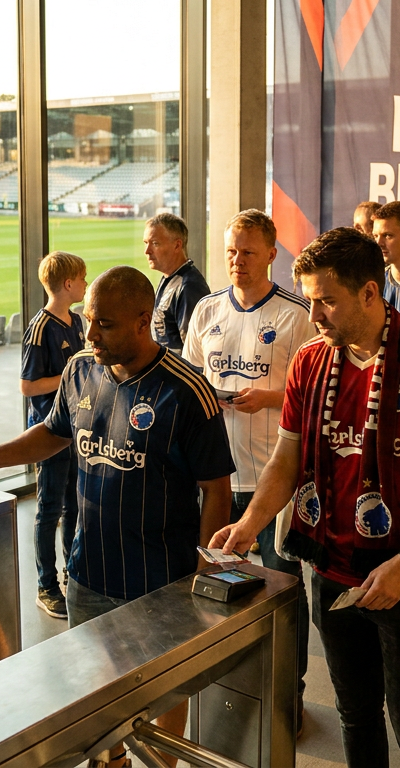
Queue formation is rarely caused by slow scanners, but by poor signage. If a fan with a season ticket stands in the line for individual sales, it creates friction when they reach the turnstile. Establish clear lanes for print-at-home tickets, mobile tickets, and season tickets respectively.
Operational Execution at the Entrance
When the gates open, staff (often volunteers) must know exactly how to handle the most common errors. The most frequent error is low brightness on mobile phones, making barcodes unreadable for older scanners.
| Problem Scenario | Standard Operating Procedure (SOP) | Tool/Solution |
|---|---|---|
| Barcode cannot be read | Increase phone brightness. If the error persists: Manual entry of order number. | Scanner keyboard or search function in app. |
| Ticket already scanned | Refer to "Troubleshoot post". Never let the queue stand still to discuss a duplicate. | Supervisor with administrative access. |
| Wrong entrance | Check sector code on the ticket. Show the way to the correct stand immediately. | Overview map at each scanner post. |
| Season ticket expired | Check payment status in the system. In case of error: Issue temporary day ticket. | Print-at-home station in the ticket booth. |
Economic Impact of Bottlenecks
Imagine a match with 1,000 spectators. If two scanning stations are down and the entry speed drops from 10 people per minute to 2 people, it will take 50 minutes to get everyone in. If this happens close to kickoff, the club loses the critical "peak sale" at the stands 15 minutes before kickoff.
On average, a Danish spectator spends 45-65 DKK at the stands per match. If 200 fans miss the opportunity to shop before the game due to queues, it corresponds to a direct revenue loss of approx. 10,000 DKK. The operational execution of ticket sales on match days is therefore a direct driver for the club's total earnings.
Technical Infrastructure and Wi-Fi Stability
Many stadiums suffer from "network death" when many people gather. If your scanners run on the same Wi-Fi as the audience, the system will crash when the stadium fills up. This is a critical point in your checklist.
Network Checklist for Match Day
- Dedicated SSID: Scanners must run on a closed, hidden network that only staff can access.
- 4G/5G Backup: Always have at least two scanners with SIM cards as backup if the local network fails.
- Offline Mode: Ensure your ticketing system supports offline validation, where data is stored locally on the scanner and synchronized when the connection is restored.
Season Tickets and Differentiated Access
Season ticket holders are the club's most important customers. Their experience at the entrance should be "fast-track". If a season ticket holder feels it is more cumbersome to get in than a person with a single-game ticket, there is a risk of churn at the end of the season.
Handling Plastic vs. Digital Cards
Although we are moving towards digital solutions, a large portion of the older audience still prefers the physical card. Ensure that scanners are calibrated to read both matte plastic surfaces and reflective mobile screens. When scanning physical cards, staff should be instructed to hold the card at a 45-degree angle to avoid glare from stadium lighting.
Staff and Instruction
Operational execution stands and falls with the people holding the scanner. In sports clubs, these are often volunteers who might only be on duty every other week. A complex 20-page manual won't work here.
The 3-Step Instruction for Volunteers:
- "Scan & Smile": Hold the scanner 10-15 cm from the code. Always greet the guest.
- "Red vs. Green": Green means enter. Red means stop – try one more time. On the second red screen: Send the guest to the supervisor post.
- No Discussion: Never stand and discuss validity. The supervisor takes over so the queue keeps moving.
FAQ: Operational Execution of Ticket Sales
What do we do if the power goes out for our scanners?
Always have manual counters (clickers) ready and a printed list of sold seats. If the system is completely down, it is better for the club economy to let people in manually and risk a few "free" spectators than to keep 500 paying customers waiting outside who would otherwise have spent money at the stands.
How many scanners do we need per 500 spectators?
As a rule of thumb, you should have one scanner per 250 expected spectators if everyone arrives within the last hour before kickoff. For major matches with many away fans, the ratio should be 1 per 150 to handle the extra searching and control.
Can we use regular smartphones for scanning?
Yes, most modern systems like Sportmanager have apps for this purpose. However, smartphones are slower to focus than dedicated laser scanners (like those from Zebra or Honeywell). For matches with over 1,000 spectators, professional hardware is recommended to ensure flow.
What is the biggest mistake in match day ticket sales?
Having the ticket booth and the entrance located in the same place without separate queues. People who need to buy a ticket block those who already have a ticket and just need to be scanned in. Always separate sales and access physically.
How do we handle sponsor tickets that have been printed multiple times?
The system will give an error message at scan number two. Here, staff should politely but firmly state that the ticket is already in use. Have a clear policy: The first person scanned gets in. The rest are referred to ticket purchase.
Wrap-up and Evaluation After the Match
Once the final whistle has blown, optimization for the next event begins. Pull a report on "Scanning Times". When was the pressure highest? Were there times when scanning stopped completely? By analyzing this data, the club can adjust staffing. If 70% of spectators arrive in the last 15 minutes before kickoff, you might consider "early-bird" offers at the stands to spread arrival times and relieve the operational execution.
Frequently Asked Questions
What economic significance do queues at the entrance have for a match?
Queues at the entrance directly affect the club's revenue at the stands. For an average Danish division club, just a 10-minute stop in access control can cost between 3,000 and 15,000 DKK in lost sales because fans don't have time to buy food and drinks before kickoff.
How do you handle technical problems when scanning tickets?
In case of scanning errors, staff should increase the mobile's brightness or enter the order number manually. If a ticket fails repeatedly, the guest should be sent to a supervisor post immediately. This ensures that the queue is kept moving and that technical discussions do not block other spectators.
How many scanners are required to ensure a good flow?
A good rule of thumb is one scanner per 250 expected spectators if they arrive in the last hour before kickoff. For high-risk matches or large away followings, capacity should be increased to one scanner per 150 spectators to counteract delays from searches and extra security checks.
How do you ensure a stable network for ticket sales on match days?
To avoid system crashes, scanners must run on a closed, dedicated network separate from the public Wi-Fi. It is always recommended to have scanners with 4G/5G SIM cards as backup and use a ticketing system that supports offline validation if the wireless connection fails during peak loads.
Read more: CRM for sports clubs
Read also
Read more: CRM til sportsklubber