The operational guide to effective ticket sales execution: From setup to scanning
For many sports clubs, ticket sales are not just a source of income, but the very foundation for the atmosphere and the experiences created at the stadium or in the arena. But behind every sold ticket lies a series of technical and operational processes that must work together to ensure a seamless experience for both fans and volunteers.
In this guide, we delve into the practical execution of ticket sales. We look at how to structure your ticketing system, handle different ticket types like season tickets and event tickets, and how to technically ensure that entry on the actual match day proceeds without queues and frustrations.
Step 1: Structuring ticket types and pricing
Before opening for sales, it is crucial to have a clear structure. A mistake many clubs make is having too few or too complex ticket categories. A good rule of thumb is that it should take less than 30 seconds for a fan to understand which ticket they need to buy.
Differentiation of event tickets
Event tickets cover access to individual matches or tournaments. To maximize revenue, you should work with categories such as adult, child, senior, and potentially student. It is important that the system can automatically generate a unique QR code for each ticket that can only be scanned once.
Season tickets – the club's steady foundation
Season tickets are crucial for the club's liquidity early in the season. Operationally, you must consider whether the season ticket should be a physical plastic card, a digital wallet file, or both. Digital season tickets are cheaper to operate, but many fans still value the physical card as a collector's item.
An important technical aspect of season tickets is "seat management." If the club has reserved seating, the system must be able to block these seats for every single match in the season so they are not accidentally sold as individual event tickets.
Step 2: The digital purchase experience
When a fan decides to support the club, the path to purchase should be as short as possible. Mobile-friendliness is no longer optional; it is a requirement. Over 70% of all tickets in modern sports today are purchased via a smartphone.
User-friendliness and checkout
Ensure that your ticketing page is fast and clear. It should not require the creation of a heavy profile to buy a single ticket. Offer "guest checkout" to reduce abandonment. The more steps there are in the purchase process, the higher the risk that the customer changes their mind or encounters technical problems.
Choice of ticket price and dynamics
Your ticket price should reflect the importance of the match or the quality of the facilities. Consider using "Early Bird" pricing to encourage people to buy tickets well in advance. This helps the club estimate attendance and thus plan the purchase of catering and staffing of stalls more accurately.
Step 3: Setting up the physical sales point
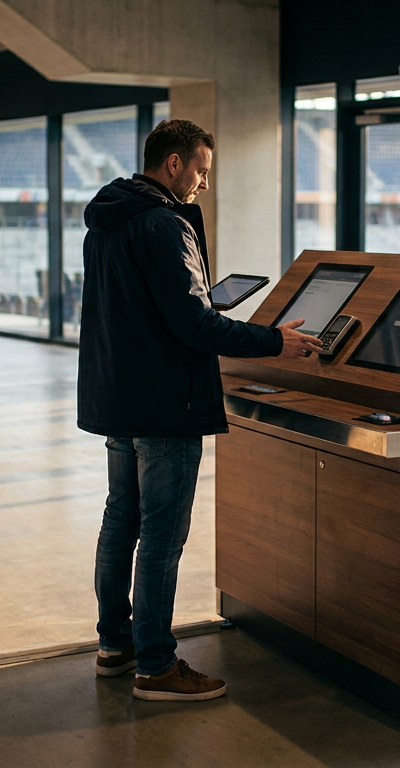
Even though digital ticket sales are growing, there is still a need to be able to sell tickets at the door on match day. This places demands on your system and your hardware.
Integration of systems
It is essential that physical sales at the entrance are integrated with the online sales running simultaneously. If a ticket is sold online two minutes before kick-off, it must immediately be active in the scanning system at the gate. This prevents fraud and ensures that capacity limits are respected in real time.
Make sure to have a stable internet connection at the entrance. If Wi-Fi is unreliable, you should use 4G/5G-based solutions for scanners and payment terminals to avoid breakdowns during the peak rush.
Step 4: Effective access control on match day
Nothing ruins a good match experience like long queues at the entrance. Effective access control requires preparation and the right equipment.
Scanning of tickets and season tickets
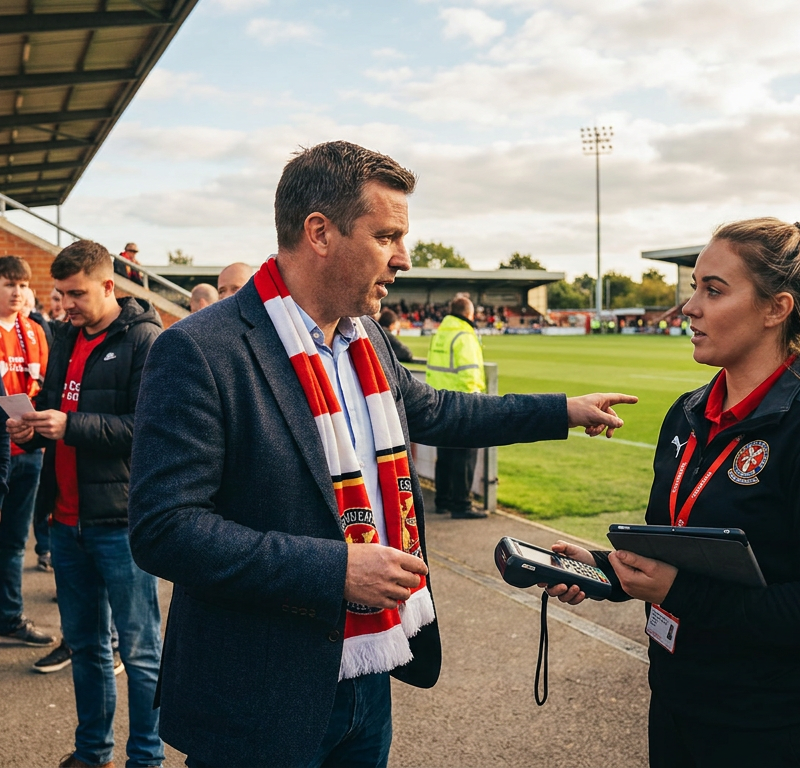
Equip your volunteers with dedicated scanners or smartphones with a professional scanning app. A good scanner must be able to read codes on screens with low brightness and scratched phone screens. This is where speed is truly tested.
Create a quick manual for the volunteers:
- How to handle a ticket that has already been scanned?
- What to do if a QR code cannot be read? (Manual entry of the order number should be a backup).
- How to quickly distinguish between adult and child tickets during scanning?
Zone management
If your club has different stands or VIP areas, your tickets must be programmed to only grant access to specific zones. This ensures that people with a standard ticket do not end up in the VIP lounge or in the most expensive seats, protecting your ticket price and the exclusive benefits for your season ticket holders.
Step 5: Communication and marketing of tickets
To drive effective ticket sales, people must know where they can buy the tickets. This requires a coordinated effort across platforms.
Newsletters and social media
Use your email database to send direct links to ticket sales out a week before the match. On social media, the "Buy Ticket" button should be the most prominent element in your posts. Use visual coverage from previous matches to show the atmosphere people miss out on if they don't buy a ticket.
Retargeting and loyalty
If a person has previously bought three event tickets during a season, your system should be able to identify them. These individuals are perfect candidates for a season ticket. By sending them a targeted offer to upgrade their experience to a season ticket (perhaps with the price of already purchased tickets deducted), you significantly increase the chance of conversion.
Step 6: Follow-up and data after the match
Once the referee has blown the final whistle and the stadium is empty, the work of optimizing the next ticket sale begins.
Analysis of attendance percentage
There is always a difference between tickets sold and actual attendance (no-show rate). If your club has many sold season tickets but many empty seats, you might consider a "release seat" function where season ticket holders can pass their ticket on or donate it back to the club for a match they cannot attend.
Identifying peak loads
Look at the scanning data. When do the majority of people arrive? If 80% arrive 10 minutes before kick-off, it creates enormous pressure. You can shift this pressure by offering "Early Bird" discounts in the stalls (e.g., half price on coffee or beer for the first hour after the gates open).
Summary: The path to the perfect flow
Successful ticket sales are about minimal friction. Fans should experience a fast and secure purchase process online, and an even faster entry at the gate. For the club, it is about having a full overview of data, capacity, and revenue in one unified system.
By combining strategic pricing, user-friendly technology, and a well-oiled operational plan for match day, you ensure not only healthy finances but also satisfied fans who return match after match.