The Ultimate Checklist for Effective Ticket Sales: From Planning to Match Day
Running a sports club requires an overview, and when it comes to match days and events, ticket sales are the engine that drives both finances and atmosphere. However, successful ticket sales are about more than just setting a price and opening the doors. It requires a structured approach where everything from the digital purchase experience to entry control works together.
This article presents a comprehensive checklist that your club can use as a reference work before each season and every major event. By following these points, you ensure that administration is minimised while revenue and spectator numbers are optimised.
Phase 1: Strategy and Pricing
Before the first tickets are put on sale, the foundation must be in place. This is where you define the framework for the season and the individual matches.
Establishing Ticket Prices
The price of your tickets should reflect both the club's value and the market's purchasing power. Consider the following:
- Do we have differentiated prices (adult, child, pensioner, student)?
- Is there a price difference between seating and standing areas?
- Do we offer "Early Bird" discounts to secure early sales?
- Is the ticket price structure transparent and easy for fans to understand?
Season Ticket Structure
Season tickets are the club's foundation for steady income and loyal fans. Check if your season ticket offer includes:
- A financial saving compared to buying individual tickets.
- Access to exclusive benefits (e.g., pre-sale for cup matches or discounts in the fan shop).
- The option for automatic renewal or subscription solutions.
- Digital delivery so the card is always at hand on the mobile phone.
Phase 2: Technical Setup and Ticketing System
It must be easy for fans to support the club. If the process of buying tickets is cumbersome, you risk losing revenue at the last minute.
User-friendliness and Accessibility
Your event tickets should be findable and purchasable in under two minutes. Review this:
- Is the purchase flow mobile-optimised? The majority of ticket sales today take place via smartphones.
- Can tickets be purchased without having to create a complex user profile first?
- Does the system support modern payment methods like MobilePay, Apple Pay, and credit cards?
- Is the ticket easy to download to a "Wallet" or receive via email?
Capacity Management
To avoid overbooking or chaos at the entrance, the technical setup must reflect reality:
- Are precise limits set on the number of tickets per section?
- Can the system handle complimentary tickets for sponsors and partners without ruining the overview?
- Do you have a plan for "sold out" scenarios – can you create waiting lists or announce it clearly?
Phase 3: Marketing and Visibility
Even the best tickets don't sell themselves. An active marketing effort is necessary to create awareness around the upcoming match.
Digital Promotion
Use your channels to drive traffic directly to the sales page:
- Are there direct links to ticket sales on the front page of the club's website?
- Have you planned posts on social media (Facebook/Instagram/LinkedIn) with direct purchase links?
- Is your mailing list used to send reminders to previous ticket buyers?
- Are you using graphics and video that create atmosphere and tell the story of the match?
Physical Marketing and Local Integration
Sports clubs thrive on the local community. Don't forget the traditional methods:
- Are there posters in the local area with QR codes linking directly to ticket sales?
- Are your sponsors involved in spreading awareness of the match within their networks?
- Is there physical ticket sales on match day for those who are not digital? (Note: Consider adding a fee here to shift sales online).
Phase 4: Operational Execution on Match Day
When fans arrive at the stadium or arena, your ticket sales and access control must function smoothly. A bad experience in the queue can discourage people from returning.
Scanning and Access Control
Speed is the keyword when doors open:
- Do you have enough scanners or terminals to handle the volume of people?
- Are staff/volunteers instructed on how to handle tickets that cannot be scanned?
- Is there a fast-track lane for season ticket holders to reward loyalty?
- Is there clear signage so people know which entrance to use based on their ticket?
Sales at the Door
Even though online ticket sales are primary, there will often be demand on match day:
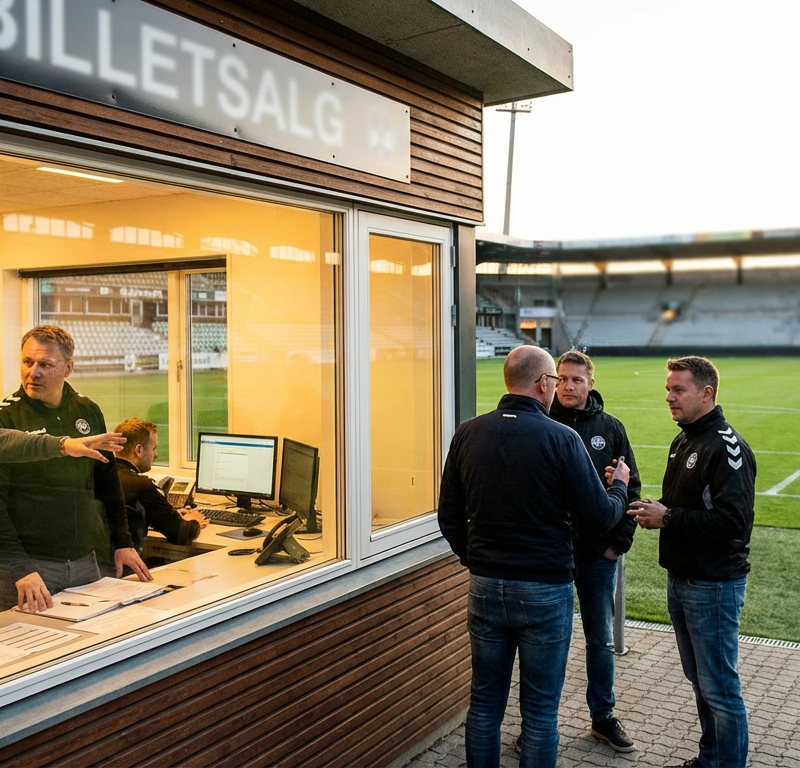
- Is there a dedicated "Ticket Window" for questions and physical sales?
- Is the price at the door higher than online to promote digital pre-sales?
- Can payments be made lightning-fast with MobilePay or card at the entrance?
Phase 5: Follow-up and Data Analysis
The work doesn't end when the match is blown off. Data from your ticket sales is gold for the success of the next match.
Evaluation of Figures
Dive into the statistics to understand your audience:
- How many of the sold tickets were actually scanned (no-show rate)?
- When were the majority of tickets purchased (week before, day before, or at the door)?
- Which sections or ticket types were most popular?
- Where did the buyers come from geographically (if data is available)?
Retaining Spectators
Turn one-time buyers into loyal fans:
- Is a "thank you for visiting" email sent to those who purchased event tickets?
- Does the follow-up include an offer for the next match or a discount on a season ticket?
- Have you collected feedback on the purchase experience and the conditions at the stadium?
Examples from Sports Clubs' Everyday Life
To make the checklist concrete, we can look at how different clubs handle challenges:
Example 1: The handball club and the busy entrances. A medium-sized handball club experienced bottlenecks 10 minutes before match start. By analyzing their data, they found that 40% of their ticket sales happened at the door. They introduced an "Online Surcharge" of DKK 20 for physical tickets and put up QR codes everywhere in the arena. The result? 85% of sales moved online, and the queues disappeared almost instantly.
Example 2: The football club and the empty season ticket seats. A football club had sold out for many matches, but the stand looked half-empty because season ticket holders weren't showing up. They introduced a "Release your seat" function in their ticketing system. If a fan knew they couldn't attend, they could release the seat for resale in exchange for a voucher for the sausage stand. This increased both revenue and the atmosphere at the stadium.
Conclusion
Effective ticket sales are about the right combination of user-friendly technology, strategic pricing, and timely communication. By using this checklist, your club ensures that nothing falls through the cracks, whether you sell ten or thousands of tickets.
Remember that tickets and season tickets are not just passes; they are the first point of contact your fan has with the club on match day. Ensure that experience is professional, fast, and painless.