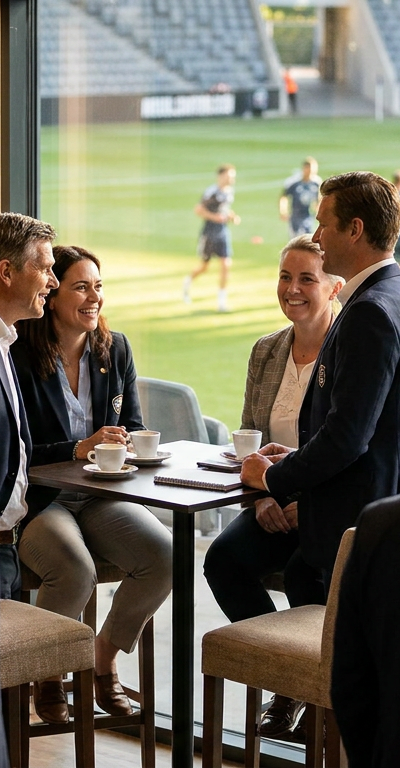
Facilitating business networks through experience-based events
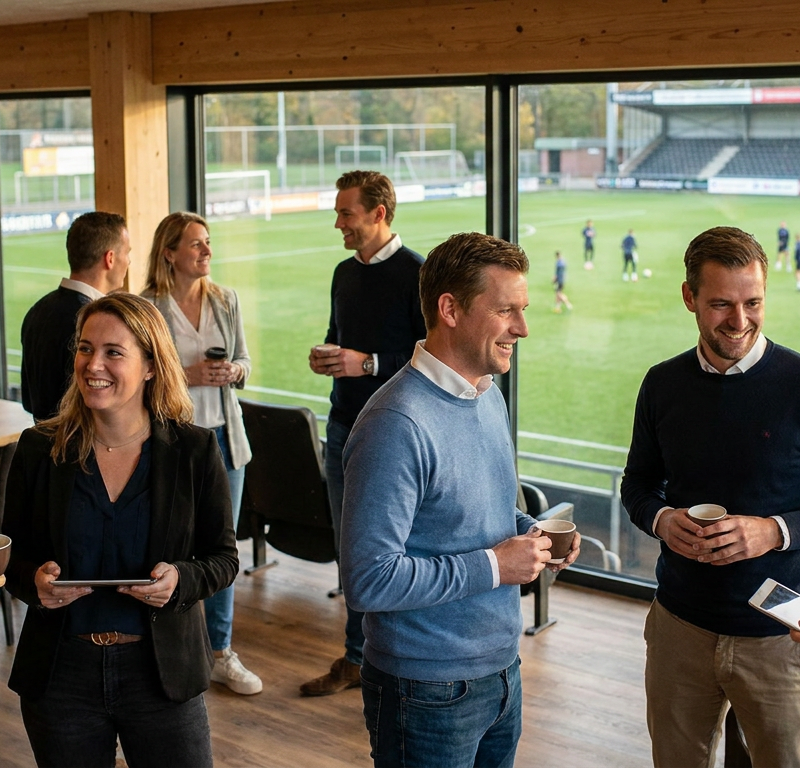
Many sports clubs find that their business networks stagnate because events lack a clear business focus. Without a structured approach to facilitating business networks through experience-based events, meetings often end up as informal small talk without measurable value for the participating companies. To retain sponsors in a competitive market, the club must act as an active business mediator that binds the network together through data and concrete conversation models.
From small talk to strategic matchmaking
When a company purchases a spot in a sports network, it is rarely for the coffee or the croissant. It is for access to decision-makers. The biggest barrier to networking success is the "comfort zone," where the same sponsors always talk to the same acquaintances. The primary task of facilitation is to break these patterns.
An effective method is to use predetermined seating plans based on the companies' industries and needs. By pairing a company seeking advice on energy optimization with a supplier in the network, the club creates instant value. This requires the club's administration to have updated data in their CRM system regarding each individual sponsor's current challenges and target groups.
Concrete questions for table rotation
Instead of letting the conversation flow freely, each table rotation should be initiated with a specific business question. This forces participants away from superficial small talk and into a value-creating dialogue. Here are three examples of questions that generate business value:
- "Which specific customer type or industry is your company trying to land a deal with this quarter, and who at this table can provide an introduction?"
- "What is the biggest administrative or operational challenge you are facing right now that a partner in this room might have solved before?"
- "Disregarding price, what is the most important criterion when you choose a new sub-supplier this year?"
Operating costs and resource consumption for network facilitation
Professional facilitation of business networks through experience-based events requires dedicated man-hours. It is a mistake to believe that these events can run themselves alongside other club operations. To ensure high quality, one must factor in both administrative hours and external costs.
| Activity | Description | Estimated AC hours (per event) | Estimated operating costs (DKK) |
|---|---|---|---|
| Planning & Matchmaking | Data analysis in CRM, segmentation of guest list, and seating planning. | 6-8 hours | 1,500 - 2,500 (Labor cost) |
| Communication & Invitation | Sending invitation flows, handling cancellations, and follow-up. | 4-5 hours | 1,000 - 1,500 (Labor cost) |
| Execution & Facilitation | Hosting, managing the program, and active introduction of parties. | 5-7 hours | 2,000 - 4,000 (Labor cost + venue) |
| Catering & Externals | Food, beverages, potential equipment rental or guest speaker. | 2 hours | 5,000 - 15,000 (Variable costs) |
| Post-event follow-up | Sending participant lists, lead mediation, and evaluation. | 3-4 hours | 800 - 1,200 (Labor cost) |
Integration between events and the CRM system
The value of a networking event is not measured on the day, but in the relationships built afterward. Here, the club's CRM system plays a crucial role. Manual handling of business cards and loose notes is inefficient and leads to lost knowledge when club staff changes.
By using digital tools, the club can ensure that data is fed directly into the system. When a sponsor registers for an event via the club's platform, the system should automatically update their profile. During the event itself, facilitators can note "match requests" directly on the sponsor's master record. If a master carpenter expresses interest in speaking with an accountant, this must be registered as a task in the CRM system with a deadline for follow-up.
Automating the follow-up flow
After a network meeting, the club should send out a digital participant list (GDPR compliance is a requirement here). The system can be set up to automatically send an email 24 hours after the event, where the sponsor can click on the companies they wish to be introduced to. This data gives the club direct insight into which sponsors are active and who needs a helping hand to get value out of their membership.
Structuring the experience-based element
Experience-based events are about using the unique framework of sports to create shared frames of reference that cannot be found in a standard conference room. This could be coach briefings before a match, locker room visits, or participation in technical training sessions.
The key is to link the experience to business learnings. A coach talking about crisis management under pressure is relevant to a CEO managing a company through a merger. When participants share an experience, formal barriers break down faster, making the subsequent networking more authentic and less forced.
Scenario: The industry-segmented growth group
Imagine a club with 100 sponsors. Instead of one large monthly meeting, the club facilitates "growth groups" of 10-12 people across complementary industries. A group could consist of a real estate agent, a lawyer, a banker, and an insurance agent. By meeting in the club's VIP lounge for a structured review of their common target groups, a direct sales channel is created that sponsors are willing to pay a premium for.
Measuring success in the network
Club management should not just measure the number of participants at an event, but the quality of the connections created. There are several parameters to assess the impact of facilitating business networks through experience-based events:
- Introduction rate: How many direct introductions has the club facilitated between two sponsors in a month?
- Retention Rate: Is the churn rate among sponsors who actively participate in the network lower than among those who just have a sign in the stadium?
- Lead generation: How many concrete business opportunities do sponsors report having gained via the network in the annual satisfaction survey?
By professionalizing these processes and moving administration into an integrated system, the club can reduce manual errors and free up time for what really matters: personal contact and value creation for the companies that support the club.
Frequently Asked Questions
What is the purpose of facilitating business networks in sports clubs?
The purpose is to transform informal small talk into strategic business development. By acting as an active mediator, the club ensures that sponsors achieve measurable value and access to relevant decision-makers. This requires a structured approach where data and concrete conversation models break habitual patterns and create growth opportunities for participating companies.
How do you create effective matchmaking for networking events?
Effective matchmaking is achieved through predetermined seating plans based on CRM data regarding the companies' specific needs and industries. By pairing participants who complement each other—for example, an advice-seeker and a supplier—instant value is created. Facilitation should be supported by targeted business questions that move the dialogue away from superficial small talk and into substance.
Why is the CRM system important for experience-based events?
The CRM system is the foundation for gathering and activating knowledge from the network. It enables the registration of match requests and the automation of follow-up flows so that valuable leads are not lost. By integrating events with digital tools, the club can document the network's value, streamline administration, and ensure personal follow-up for every single sponsor.
How is the success of a professional business network measured?
Success is not measured by the number of participants, but by the quality of the connections created. Key performance indicators include the introduction rate between sponsors, the retention rate of active network participants, and the amount of reported leads. A high success rate indicates that the club has managed to create a direct sales channel that members find valuable enough to invest in.
Read more: CRM for sports clubs
Read also
Read more: CRM til sportsklubber