Exposure or Engagement? Comparing Strategies in Modern Sponsorship
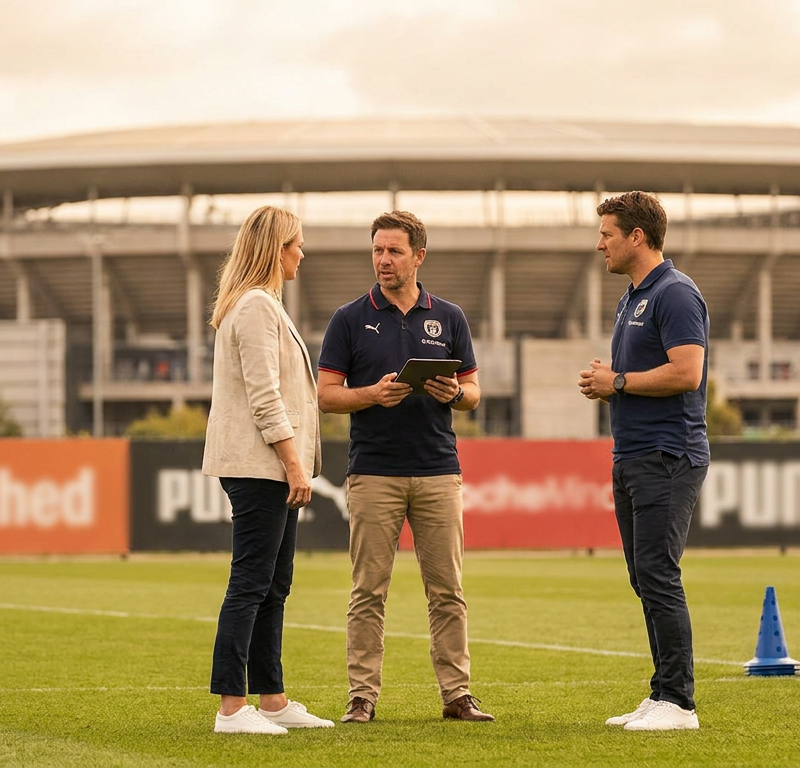
When sports clubs today need to raise funds through sponsorship work, they face a strategic choice: Should they focus on the classic exposure model, or should they move toward deep, engagement-driven partnerships? The choice has a significant impact on both the club's daily operations and its long-term financial stability.
In this article, we compare the two most prominent methods in sponsorship sales and sponsorship management. We look at the advantages, disadvantages, and concrete scenarios so your club can make an informed decision on how your future sponsorship agreements should be structured.
The Exposure Model: Classic Logo Sales
The traditional approach to sponsorship work is based on visibility. Here, the club sells access to its physical and digital platforms – what we often call "logo moving." This typically includes perimeter advertising, logos on player jerseys, advertisements in match programs, and exposure on the club's website.
When does exposure work best?
Exposure-based sponsorship deals are often most effective for clubs with many visitors or a high reach on social media. For the local business owner, it's about being seen by as many people as possible in the local area. It is a simple transaction: the company pays an amount, and the club ensures that the logo is visible.
The advantage of this model is that it is easy to understand and quick to execute. No complex strategies are required to hang an advertising banner or print a logo on a t-shirt. For many smaller clubs, this is the foundation of their sponsorship work because it requires fewer administrative resources in daily life.
The Engagement Model: Value-Based Partnerships
Where the traditional model focuses on "how many see us," the engagement model focuses on "what do we do together." Here, the move is away from standardized packages and toward tailored partnerships that solve specific challenges for the sponsor.
Create value through interaction
Engagement-driven partnerships can involve everything from joint CSR projects (social responsibility) to B2B networking meetings where sponsors gain direct access to trade with each other. Here, it is not necessarily the number of eyes on a banner that counts, but rather the quality of the relationships created.
An example could be a local bank that doesn't just want its logo on the jersey, but wishes to hold "financial first aid" evenings for the club's youth players. here, the bank becomes an active part of club life, which creates much stronger loyalty among members than just a logo on the chest.
Comparison: Which path should your club take?
To choose the right strategy, it is necessary to look at the club's resources and the sponsor's needs. Below we compare the two approaches on four critical parameters.
1. Time consumption and administration
Exposure: Requires low to medium effort. Once the agreement is signed and the sign is up, there is limited ongoing work. Sponsorship management here primarily involves invoicing and renegotiation.
Engagement: Requires high effort. Partnerships require ongoing dialogue, planning of activation activities, and close follow-up. This places greater demands on the club's volunteers or employees in the sponsorship department.
2. Pricing and revenue potential
Exposure: The price is often locked by market rates for visibility. There is a natural ceiling for how much a local carpenter will pay for a banner spot.
Engagement: The potential is significantly higher. When the club helps a company recruit employees, create new B2B leads, or strengthen their brand image through concrete actions, the company is often willing to invest significantly more.
3. Retention of sponsors
Exposure: The risk of cancellation is higher in times of crisis. Marketing budgets for "visibility" are often the first to be cut if a company needs to downsize.
Engagement: Retention is stronger. If the sponsor has become an integrated part of the club's network and sees concrete business or social results, the partnership is viewed as an investment rather than a cost.
4. Data requirements and documentation
Exposure: The sponsor will often ask for visitor numbers or click rates. It can be difficult to document the precise value of a sign at the stadium.
Engagement: Here, success is documented through concrete success criteria (KPIs). This could be the number of participants at a joint event or the number of meetings booked through the club's business network.
The Hybrid Model: The golden middle way
Most successful clubs today land on a hybrid solution. They use exposure as the "entry ticket" (basic package) but offer add-on engagement packages that create deeper value. In this way, a stable bottom line is secured through many small exposure agreements, while large partnerships drive economic growth.
Example of hybrid sponsorship management:
- Bronze level: Logo on website and a small banner (Exposure).
- Silver level: Bronze + access to the club's business network (Exposure + Relationship).
- Gold level: Silver + a dedicated activation day where the club's players visit the company or participate in a joint event (Full Engagement).
How do you get started moving your sponsorship sales?
If your club lives exclusively on classic logo sales, the first step is to look at your current sponsors. Which of them has potential for more? Instead of just sending a renewal of the existing contract, you can invite them to a coffee meeting with the question: "What is your biggest challenge in the company right now, and how can we help you solve it?"
Modern sponsorship sales are more about listening than talking. By understanding the company's needs, you can transform a simple sponsorship agreement into a strategic partnership.
The importance of structure in sponsorship work
Regardless of which model you choose, structure is alpha and omega. If you choose the engagement path, you must have control over your sponsorship management. Who has spoken to whom? When should the partner event be held? Have the logos been updated? Without a system to keep track of the details, complex partnerships quickly fall apart, and the sponsor's trust disappears.
Final considerations
The choice between exposure and engagement does not have to be either-or. By understanding the differences, you can target your efforts. Smaller, local businesses will often be happy with classic exposure, while larger, strategic partners require engagement to stick around in the long run.
The most important thing is that your sponsorship work reflects the value your club can actually deliver. Start small, build relationships, and ensure a professional approach to both sales and follow-up. This is the recipe for a healthy club economy through strong partnerships and sustainable sponsorship sales.