5 Strategies for Activating and Retaining Sponsors in Your Sports Club
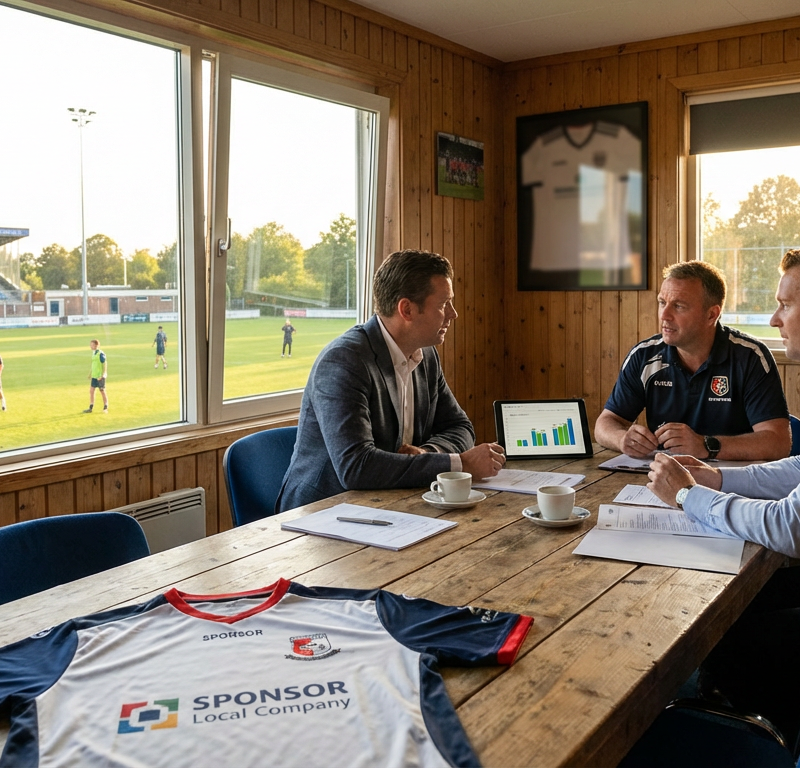
When most sports clubs talk about sponsorship work, the conversation quickly turns to "the next big sale." But the truth is, it is far cheaper and more efficient to retain an existing sponsor than to have to go out and find a new one every season. The cornerstone of a healthy sponsorship concept is not just selling a sign on the field, but creating value that can be measured and felt within the company.
In this article, we dive into how you move from passive sponsorship agreements to active partnerships. We look at concrete methods for activation, communication, and ongoing sponsor management that turn your club into an indispensable partner.
1. From exposure to involvement: What does the sponsor actually want?
For many years, sponsorship sales were synonymous with logo elements: a logo on the jersey, a logo on a perimeter board, and a logo in the match program. Although visibility still has value, modern companies often look for something more substantial. They want to buy into a story, a community, or a specific target audience.
To succeed with your sponsorship work, you must understand the individual sponsor's motivation. A local carpenter might want to support the local youth department because he needs apprentices. A medium-sized company might want access to the club's business network to create new B2B relations. A third sponsor might exclusively seek CSR (Corporate Social Responsibility) points by supporting social inclusion in the club.
Ask about their KPIs
Try asking your sponsors: "What needs to happen this year for you to consider this partnership a success?". By knowing their success criteria, you can tailor your efforts. If the goal is recruitment, you can arrange a "career day" in the clubhouse. If the goal is brand awareness, you should focus on your social media and digital reach.
2. Create value through digital activation
Sponsor management today requires a digital presence. A perimeter board is only seen by those physically present at the match, but your digital platforms have the potential to reach much further. Activating sponsors on social media is one of the most effective ways to create tangible value.
Consider the following examples of digital activation:
- "Talent of the Month" presented by [Sponsor]: Create a short video interview with a young player and let the sponsor put their name to it.
- Match-day takeovers: Let a sponsor "take over" your Instagram story during a match day, where they show their connection to the sport.
- Digital coupon book: Give your members exclusive discounts at the sponsor via the club's newsletter or app. This creates direct traffic and revenue for the sponsor.
By using digital tools, you can also deliver concrete data back to the sponsor. You can tell them exactly how many people have seen their logo or how many have clicked on a link. Data is worth its weight in gold when the sponsorship agreement is up for renegotiation.
3. Strategic networking: Make sponsors each other's customers
One of the most overlooked strengths in sports clubs' sponsorship work is the role of network facilitator. When a company buys a sponsorship, they often also buy access to the other companies in the club. This is often referred to as B2B partnerships.
To optimize this, you must make it easy for your sponsors to meet. It doesn't have to be big, elaborate gala dinners. Smaller, informal network meetings every two months can be incredibly effective. Here, a sponsor can briefly talk about their company while the others listen over a cup of coffee or a light breakfast.
The good example: "Sponsor speed dating"
Try arranging a meeting where each sponsor gets 2 minutes to explain who their ideal customer is. As a club official, you can then proactively match sponsors who can benefit from each other. When a sponsor gets a new customer through your network, your sponsorship agreement suddenly becomes an investment rather than an expense. That is the ultimate form of retention.
4. Professionalizing sponsor management and reporting
The biggest point of irritation for a sponsor is lack of follow-up. Many clubs are good at sending an invoice but less good at saying thank you or showing the results of the support. A professional approach to sponsor management ensures that no agreements fall through the cracks.
Create an annual cycle for your communication with sponsors. This could include:
- Season start: A greeting with information about upcoming activities and when their logo is installed.
- Mid-way update: A short email about how things are going promotionally and in the youth department, ideally with a photo of their logo in action.
- End of season (Status report): A summary of the year. How many exposures have there been? Which events did the sponsor participate in? What difference has their contribution made to the club's members?
When you send a status report, you show that you take their investment seriously. This makes it much easier to ask for a contract renewal because you have already proven the value of the collaboration.
5. Involve the members in your partnerships
Partnerships work best when they are anchored in the entire club – not just with the board or the sales department. The club's members, parents, and fans are the actual "consumers" of the sponsor's products. If members feel a loyalty toward the companies that support their club, a unique synergy arises.
You can help this process along by making it clear who is supporting you. It’s not just about logos, but about telling stories. "It is thanks to [Sponsor] that we have new goals for the 3-a-side pitches" or "Remember to buy your building materials at [Sponsor], they support our training camp."
Make it easy to support the sponsors
Create an overview on your website or in your club app where members can always see current offers from sponsors. If you can create a culture where a member always checks the club's sponsors first when they need a painter, a bank, or a new car, then you have created a platform that is extremely attractive to the business community.
Summary: The path to successful sponsorship sales
Sponsorship work in a sports club today is more about relationships and value creation than about mere donations. By focusing on sponsor activation, digital visibility, networking opportunities, and structured sponsor management, you can lift your club to a new level.
Remember that the best partnerships are built on a "win-win-win" situation: A win for the sponsor (revenue/branding), a win for the club (finances/resources), and a win for the members (better facilities/experiences). When you master this balance, your sponsors won't just be contributors – they will be ambassadors who stay with you year after year.
Start small. Choose one of these strategies and implement it fully in the coming season. When you see the effect of a more professional approach, it will motivate both the club's volunteers and your partners to do even more.