The Ultimate Checklist for Volunteers and Crew: From Planning to Execution
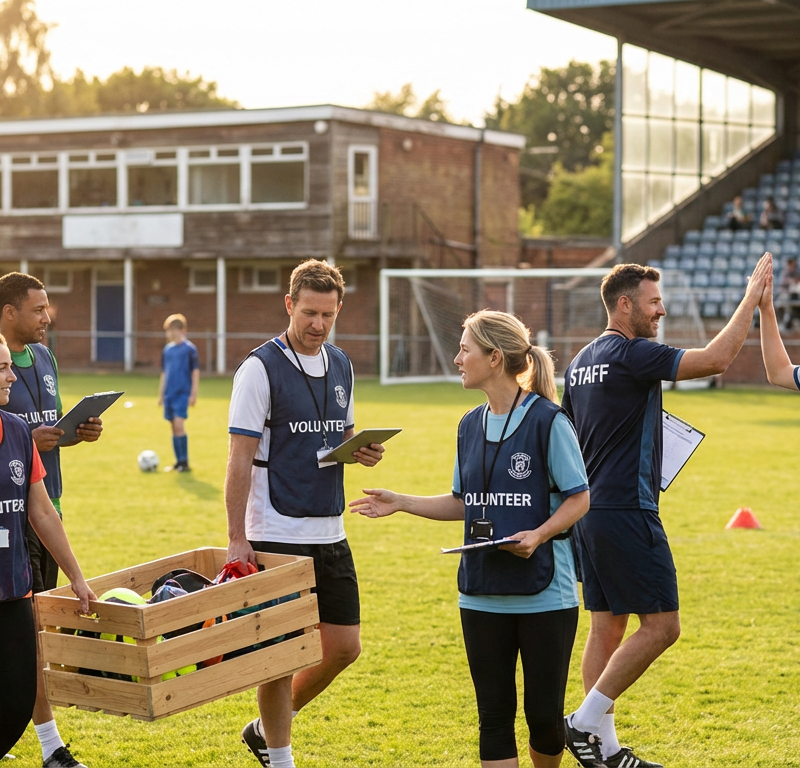
In every Danish sports club, volunteers are the beating heart that keeps everyday life rolling. However, without a structured approach to crew and planning, the same few people often end up carrying the entire load. The result is burnout and a lack of overview.
To ensure healthy club operations, more than just a plea for help on Facebook is required. It requires a systematic process for staff planning that takes into account both the club’s needs and the volunteers' motivation. This article serves as your practical checklist that you can use directly in your work with crew management.
Phase 1: Needs Analysis and Role Definition
Before you even begin looking for crew, you need to know exactly what you are looking for. Ambiguity is the greatest enemy of volunteer recruitment.
Define concrete tasks
Many clubs make the mistake of searching broadly for "helpers." It is far more effective to define specific roles. Create a list of all functions: Do you need people for the kiosk, referee tables, parking attendants, or coaches? The more specific you can be regarding time commitment and area of responsibility, the easier it is for a busy parent or member to say yes.
Estimate time consumption per shift
Volunteers are afraid of being "trapped" in endless tasks. Your checklist should include fixed start and end times for all shifts. If a parent knows that the shift in the sausage stand lasts exactly from 10:00 AM to 12:30 PM, the barrier to signing up is significantly lower.
Phase 2: Strategic Recruitment
Once the roles are defined, the message needs to get out. But recruitment is not just about shouting the loudest; it's about reaching the right person at the right time.
Target your communication
Use different channels for different target groups. Young members are best reached on social media or directly on the field, while the mature segment often appreciates a personal approach or an email. Always remember to highlight the social aspect – it should be fun to be part of the crew.
Make it easy to sign up
Remove all friction points. If a volunteer has to fill out three PDF forms and send them back by post, you will lose them. Use digital solutions or simple online forms where they can choose the shifts that fit their calendar with two clicks.
Phase 3: Effective Staff Planning and Shift Management
Once people have signed up, the real work of making the puzzle fit begins. Effective staff planning is the key to a stress-free match day or a successful tournament.
Create clear shift schedules
The classic Excel list on the noticeboard in the clubhouse is rarely enough today. Your checklist for shift planning should ensure that all volunteers have access to the schedule around the clock. Make sure to have a backup list (reserve team) in case of illness or last-minute cancellations.
Automatic reminders
Do people forget their shifts? It is one of the greatest frustrations in community life. Build in a system – either manually via SMS chains or automatically via an IT system – that reminds the volunteer of their shift 24 hours in advance. This significantly reduces the number of "no-shows."
Phase 4: Briefing and Preparation of Crew
A volunteer who doesn't know what to do quickly feels uncomfortable. Good crew management is about giving people the necessary tools for success.
Prepare "Quick Guides"
Create very simple instructions for the most common tasks. How do you turn on the deep fryer in the kiosk? What is the code for the kit bag? Who do you call if a door is locked? Have these guides physically available in relevant places or send them digitally along with the shift confirmation.
Welcome on the day
Ensure there is a responsible person to greet the volunteers when they arrive. A short "Hey, it's great that you're here" and a quick tour do wonders for retention. People should feel seen and appreciated from the moment they step into the clubhouse.
Phase 5: Care and Retention (The Important Aftermath)
It is far cheaper and easier to retain an existing volunteer than to find a new one. Therefore, retention is a critical point on your checklist.
Recognition and feedback
After an event, you should always send a thank you to the entire crew. It could be a collective email with the results of the day (e.g., how much was sold in the kiosk, or how many children had a great experience). The feeling of having contributed to something bigger is the fuel for volunteerism.
Evaluation meetings
Ask the volunteers: Did the shift schedule work? Were the tasks clearly defined? By involving the crew in the process, they feel greater ownership, and you gain valuable insight into how staff planning can be improved for next time.
Checklist Summary: Are you ready for the next event?
Use this quick checklist before your next big activity day:
- Job descriptions: Are all roles defined with concrete tasks?
- Timeframes: Do all shifts have a clear start and end time?
- Communication: Do all volunteers know who their contact person is?
- Accessibility: Can volunteers see their own shifts on their phones?
- Catering: Have coffee, food, or water been provided for adult helpers?
- Equipment: Are the necessary keys, codes, and manuals ready?
- Follow-up: Is a thank-you message to the crew planned after the day?
By working structured with this checklist, you move the club from a culture characterized by ad-hoc solutions to professional crew management. This creates not only better events but also happier volunteers who want to return next year.
When you get your staff planning under control, it releases resources for what it's all about: the sport, the community, and the great experiences in the association.