The Tactical Guide to Match-making: How to Drive Concrete Results in Your Business Network
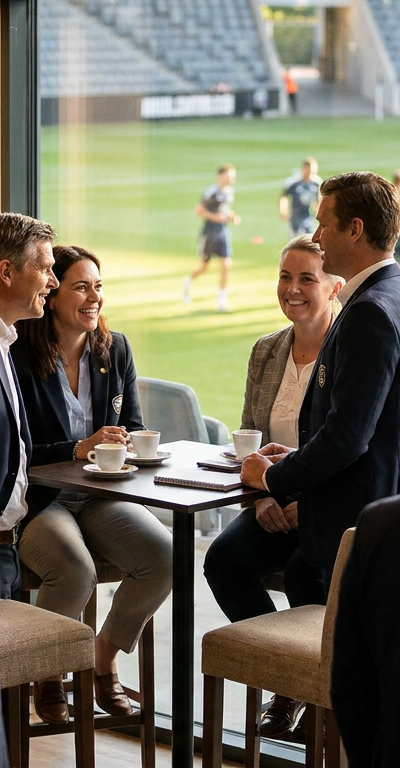
In many sports clubs, the business network is the heart of the commercial strategy. But there is a world of difference between inviting sponsors for a cup of coffee in the VIP lounge and facilitating a professional network where members actually generate revenue with each other. To elevate the club's events from social gatherings to strategic business development, a proactive approach to networking is required.
This article takes you through the concrete steps you need to take as a network manager to ensure that your events create tangible value. By focusing on active match-making and data-driven planning, you can transform your sponsors from passive contributors into loyal business partners.
Understand the Foundation for Valuable Networking
Before you even send out the next invitation, you must understand your sponsors' needs. A local master carpenter likely participates in your club's network for different reasons than a large regional IT company. Some seek exposure, others seek specific B2B leads, and some simply want to support the local community.
The key to successful events lies in mapping these needs. A good exercise is to conduct a "stakeholder analysis" of your network members. What do they sell, and who are their ideal customers? Once you have this knowledge, you can begin to design your events with the goal of bringing the right people together.
The Three Levels of Networking
To create a dynamic environment, your events should cover three different levels of engagement:
- The social level: This is where relationships and trust are built through informal chats (e.g., before a match).
- The professional level: This is where knowledge is shared that makes members smarter about their own business (e.g., through external speakers).
- The transactional level: This is where direct trade and referrals between members are facilitated (e.g., through structured match-making sessions).
Strategic Planning of Your Events
A good network meeting rarely happens by chance. It requires tight management of the program so that participants feel their time is respected. Time is the scarcest resource for business professionals, and if they spend two hours at your club, they should leave with the feeling that it was "well spent."
Every event should have a clear theme. The theme acts as a catalyst for conversation. If the topic is "Sustainability in Construction," for example, you will naturally attract companies within this sector, making it easier for them to network regarding relevant challenges and solutions.
Structure Your Schedule for Maximum Engagement
Consider a model where you alternate between fixed program points and free networking. An effective template could look like this:
- Arrival and quick coffee (15 min): Allows space for informal greetings.
- Welcome and "Around the Club" (10 min): Short updates from the sports club to maintain the emotional connection.
- Case study or presentation of the day (30 min): Professional inspiration that gives participants something to talk about.
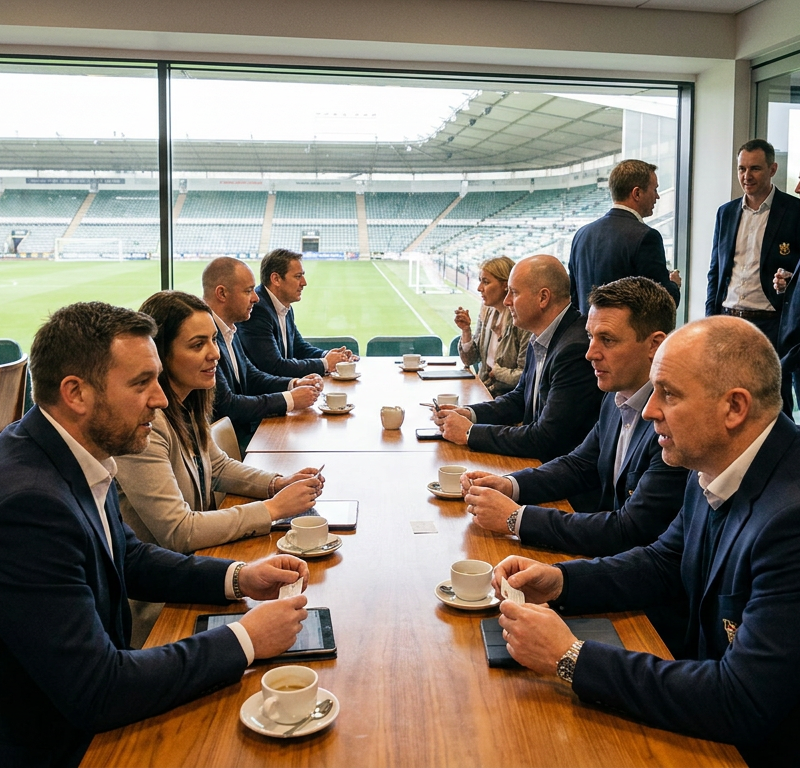
- Facilitated speed-networking (30 min): Here you control who talks to whom.
- Wrap-up and "Call to Action" (5 min): What is the next step for participants?
Active Match-making: Taking the Role of Facilitator
The biggest mistake many clubs make is leaving networking to chance. Many people are naturally introverted or have a tendency to talk to the same 2-3 people they already know. This is where your role as a facilitator becomes crucial.
As a network leader, you must be the person who actively brings people together. If you know that Company A is looking for a new accountant, and Company B has just specialized in consulting for sports clubs, it is your job to introduce them to each other. This is known as "Double Opt-in Introductions" and is worth its weight in gold in a professional network.
Concrete Tools for Match-making
Try implementing assigned seating at tables based on strategic considerations rather than open seating. You can also use "interest forms" where each participant has indicated one wish for a person or industry they would like to contact before the meeting. At the event itself, you can then distribute an optimized participant list where matches are already highlighted.
Creating Engagement Before, During, and After Your Events
An event is not just the two hours it lasts. It is a process that starts weeks before and ends weeks after. To increase engagement, you must build a bridge between the physical meetings.
Before the event: Create anticipation
Send a teaser out to the network. Who is coming? What problem are we solving today? Use your digital platforms to present the speaker of the day or a sponsor who has had a particular success story. This creates a sense of missing out on something important if one does not participate.
During the event: Make it interactive
Avoid long PowerPoints where people just sit and listen. Instead, use workshop formats or short "elevator pitches" where members get the floor. The more the participants are involved themselves, the more ownership they feel for the network. Also, make sure to have "icebreakers" ready – simple questions or small tasks that force people to interact in an informal way.
After the event: Follow-up is key
The value of networking disappears quickly if there is no follow-up. Send a summary of the day's most important points, a participant list with contact information (remember GDPR), and potentially links to the presentations that were shown. For the most valuable sponsors, you can have a personal conversation: "I saw you talking for a long time with Hans from the painting company – did you manage to arrange a follow-up meeting?"
Measuring Success for Networks and Events
How do you know if your network is a success? It is not enough to count the number of cups of coffee consumed. You need concrete metrics to document the value to your sponsors and the board.
Consider tracking the following parameters:
- Attendance rate: How many of the invited guests actually show up?
- Retention rate: How many sponsors renew their membership in the network year after year?
- Referrals and closed business: Conduct regular surveys asking: "Have you done business with others in the network in the past quarter?"
- Net Promoter Score (NPS): Would your members recommend the network to other companies?
When you start showing black figures on your sponsors' bottom lines as a result of your events, the price of a sponsorship becomes secondary to the value they receive in return. This is where you create a sustainable and financially strong foundation for your sports club.
Final Thoughts on the Club Network of the Future
The world is changing, and so is the way we network. The most successful sports clubs are those that manage to combine the unique passion of sport with hard-hitting business acumen. Your role as a network manager is to be the bridge builder who ensures that the right people meet at the right time with the right intentions.
By using these actionable methods – from strategic planning to active match-making – you can ensure that your events become the highlights of the season for your partners. Remember that a strong network does not only benefit the sponsors; it creates a stable economic base that ultimately makes it possible for the club to perform on the field.