The Operational Checklist for Staff Management: From Recruitment Strategy to Shift Coordination
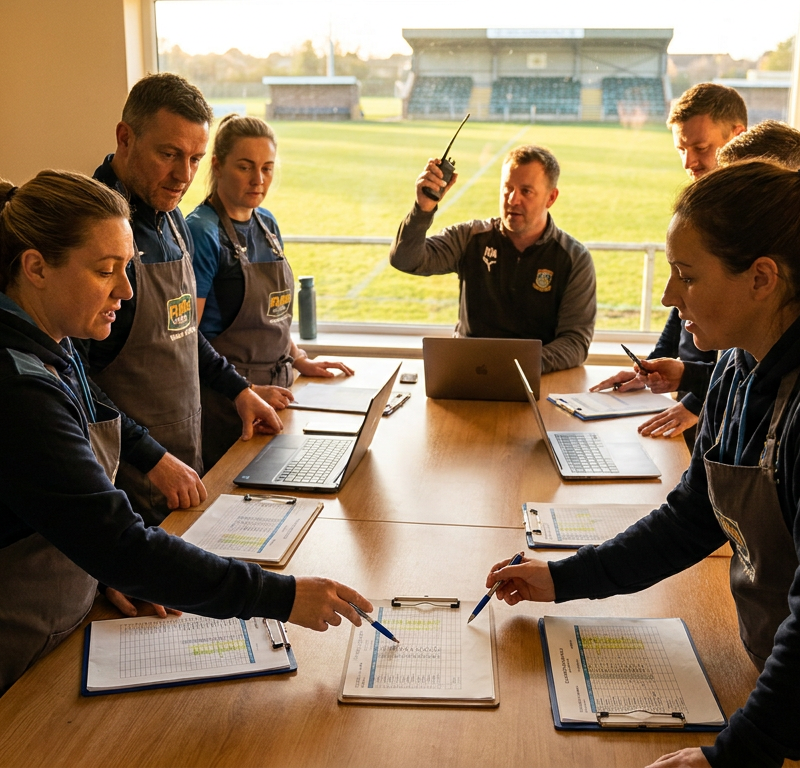
Volunteers are the engine of any sports club. Without dedicated people to run the concession stand, referee matches, coach youth teams, or manage the entrance, the club would come to a standstill. Yet, many club boards and managers find that the task of staff care and personnel planning is one of the most time-consuming and stressful disciplines.
To ensure healthy operations where volunteers don't burn out and tasks are completed perfectly, a structured approach is required. This checklist is designed to provide you with an operational overview of all phases of working with volunteers and staff – from initial recruitment to the ongoing coordination of shifts.
Phase 1: Needs Analysis and Task Descriptions
Before you even begin reaching out for new faces, you must have a clear understanding of exactly what you need help with. One of the biggest mistakes in many clubs is a too vague description of the need.
Checklist for identifying needs:
- Mapping permanent vs. ad hoc tasks: Do you need someone who can take a regular weekly shift, or do you need 20 people for a one-off tournament?
- Preparation of precise job cards: Write down what the task entails. "Help in the kiosk" is not enough. Instead, write: "Selling coffee and sausages, operating the MobilePay system, and light cleaning from 10 AM to 2 PM."
- Time estimation: Be honest about the time commitment. It builds trust when a volunteer knows exactly when they are finished.
- Clarification of competencies: Does the task require specific certificates (e.g., coaching license or hygiene certificate) or simply a good mood?
Phase 2: Strategic Recruitment of New Volunteers
Recruitment is about matching the club's needs with the volunteer's motivation. It is rarely about simply "shouting loudly" on Facebook, but about being targeted in your communication.
Checklist for the recruitment process:
- Segmentation of target groups: Consider whether the task is best suited for a retiree, a student, or a parent of a member.
- Use multiple channels: Use the club's newsletter, posters in the hall, social media, and – most importantly – personal networks. Personal outreach has the highest success rate.
- Onboarding material: Do you have a "Welcome to the Club" folder or email explaining practical conditions and the club's values?
- Highlighting benefits: What does the volunteer get out of it? Networking, free coffee, a clothing package, or perhaps experience for their CV?
Phase 3: Operational Staff Planning and Shifts
Once the staff is in place, the logistical puzzle begins. Good shift planning minimizes confusion and ensures everyone knows where they need to be and when.
Checklist for shift management:
- Centralized shift overview: Ensure there is one place (physical or digital) where everyone can see covered and vacant shifts. This prevents double bookings.
- Automatic reminders: Send an SMS or email 24-48 hours before the shift starts. This significantly reduces the number of forgotten shifts.
- Emergency contact list: Always have a list ready with phone numbers of people who can step in case of illness or acute shortage.
- On-site instructions: Are there clear instructions available at the location where the task is to be performed? (e.g., a guide on how the coffee machine works in the kiosk).
Phase 4: Management and Retention of Staff
It is far cheaper and easier to retain an existing volunteer than to recruit a new one. Retention is about well-being, recognition, and the feeling of making a difference.
Checklist for a good volunteer environment:
- Ongoing feedback: Does the leadership remember to say thank you after a successful event? A personal thank you means more than an official email.
- Social events: Do you hold an annual volunteer party or a social evening where the focus is not on work, but simply on socializing?
- Influence: Are the volunteers heard? Give them the opportunity to provide suggestions for improvements in their work areas.
- Equipment and framework: Do the volunteers have the right tools to perform their tasks effectively? (e.g., well-functioning IT systems or proper kitchen equipment).
Phase 5: Evaluation and Optimization
After major events or at the end of the season, it is important to evaluate the staffing effort. What worked, and where did bottlenecks occur?
Checklist for follow-up:
- Exit interviews (unofficial): Ask volunteers who are leaving why they are doing so. Is it a lack of time, or is there something in the club that could be done better?
- Data collection: How many hours were put in? Which shifts were the hardest to fill? Use this knowledge for planning the next season.
- Updated database: Is your member and volunteer archive updated with the latest contact information and skills?
Concrete examples from everyday club life
Imagine a local football club hosting a large summer tournament. By using this checklist, they discover early on that their biggest challenge is not the number of volunteers, but the communication of shifts. By introducing precise task descriptions (e.g., "Parking attendant - yellow vests are in the shed") instead of just asking for "help with parking," they find that volunteers are much more confident in their roles and require less guidance on the day itself.
Another example is the swimming club struggling to find officials. By focusing on Phase 2 (recruitment) and articulating the personal development and the courses the club pays for, they successfully attract parents who see the value in gaining new skills rather than just seeing it as a duty.
Summary
Effective staff care and personnel planning in a sports club is a task that is never truly finished. It is an ongoing process that requires structure, empathy, and oversight. By following this checklist, you ensure that your club stands strong, whether it's for daily training or major championships. When volunteers feel seen, heard, and well-informed, the best foundation is created for a vibrant and sustainable sports club.