The Operational Checklist for Club Management: Ensuring Continuity in Daily Operations
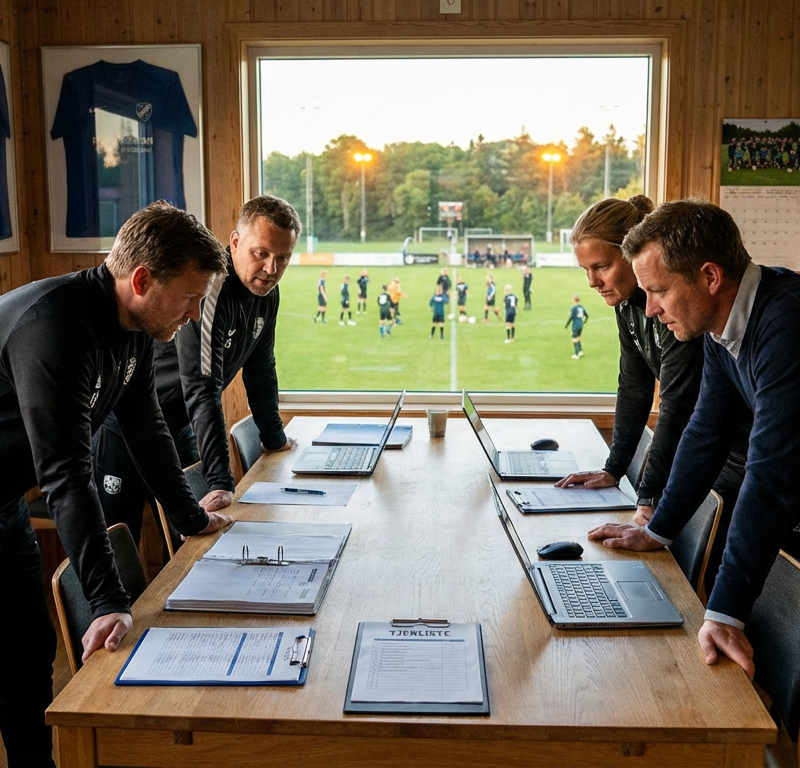
In many Danish sports clubs, the administration is carried out by a small number of dedicated enthusiasts. Challenges often arise when key personnel are replaced, or when administrative tasks grow larger than the time available. Stable and efficient club management is not just about surviving from week to week, but about creating systems that make leadership and administration manageable for everyone involved.
This article presents an operational checklist that the board and administrative managers can use to review the club's current processes. The goal is to remove bottlenecks and ensure the club is run like a modern organization, where knowledge is not locked with individuals but is anchored in fixed procedures.
1. The Foundation: Bylaws and Distribution of Responsibility
The first step in a well-functioning club administration is ensuring that the legal and organizational foundation is in order. Without clear lines, doubt quickly arises about who is authorized to make decisions, which can paralyze the club's progress.
Review of Bylaws
- Are the club's bylaws updated in accordance with current legislation (e.g., GDPR)?
- Do the bylaws clearly describe how the board is constituted?
- Are clear frameworks defined for signing authority and financial dispositions?
Role Descriptions for the Board
A classic mistake in many associations is that everyone on the board does "a bit of everything." To optimize your leadership, there should be written role descriptions for the chairman, the treasurer, the secretary, and the ordinary members. This also makes it much easier to recruit new volunteers when they know exactly what the task entails.
2. Financial Management and Transparency
Finance is the heart of any club operation. If there is no control over membership fee collection, receipts, and budget follow-up, the board quickly loses oversight of the club's freedom of action.
Automated Membership Fee Management
Are you still using manual bank transfers? A modern club administration should use a system that automatically sends out invoices and reminders for missing payments. This significantly reduces the treasurer's time consumption and ensures a steady cash flow.
Budget and Reporting
- Has a realistic annual budget been prepared and approved by the board?
- Does the board receive a monthly or quarterly operational follow-up?
- Is there a clear process for approving expenses from coaches and volunteers?
Example: A local football club experienced that over 15% of members did not pay their fees on time because the system was too cumbersome. By implementing automatic card payments, liquidity increased immediately, and the secretary saved 10 hours of manual work every month.
3. Strategic Volunteer Management
Volunteers are the club's most important resource, but they are also the most difficult to manage. Good volunteer leadership is about making it easy to contribute and ensuring they feel valued.
Welcome Package for New Volunteers
When a new coach or team manager starts, they should receive a digital or physical folder with all relevant info: access codes to the facility, a contact list for the board, guidelines for background checks (child certificates), and the club's core values. This ensures a professional start and reduces uncertainty.
Storage and Handover of Knowledge
Where do you store your documents? If everything is in a private Dropbox or on a personal computer, the club is vulnerable. Use a shared platform where all relevant documents are archived structurally. This is essential when board positions change hands.
4. Communication and Digital Presence
Administration is also about how the club communicates with the outside world – members, parents, and potential sponsors alike. Unstructured communication creates frustration and unnecessary questions for the board.
The Central Information Channel
- Does the club have one primary platform for member communication (e.g., an app or a closed forum)?
- Is the website updated with the latest training times and contact persons?
- Is there an annual plan for recurring events (general meeting, end-of-season parties, tournaments)?
Many clubs suffer from "information noise," where messages flow on Facebook, Messenger, SMS, and email. By deciding on one primary channel, administration can be streamlined, and the response rate from members will typically increase.
5. Optimization of Facilities and Equipment
Club management also involves the physical environment. Without a plan for equipment maintenance and booking of pitches or rooms, conflicts often arise between different teams or departments.
Digital Booking and Inventory List
Who has the key to the ball room? When is the hall available? A simple digital calendar, accessible to all coaches, can eliminate 80% of daily coordination challenges. Likewise, there should be an updated list of the club's equipment, so you know when to budget for new purchases.
6. The Annual Cycle: The Club's Most Important Management Tool
To ensure stable administration, the board should work from a established annual cycle (year wheel). This tool helps distribute administrative tasks evenly throughout the year, avoiding panic before the general meeting or the start of the season.
Example of items in an administrative annual cycle:
- January: Audit of accounts and preparation for the general meeting.
- March: Obtaining mandatory background checks (child certificates) for all volunteers.
- May: Membership fee adjustment and budgeting for the next season.
- August: Kick-off meeting for all coaches and volunteers.
- October: Evaluation of sponsor relationships and preparation of new agreements.
7. Security and Compliance (GDPR)
In a modern club administration, data handling cannot be ignored. Legislation places significant demands on how personal data is stored.
Checklist for Data Ethics
Are you sure your member lists are not freely accessible to everyone? Ensure you have a clear privacy policy and delete data on members who are no longer active in the club. This is not only a legal requirement but also a sign of good leadership and respect for members' privacy.
Summary: The Path to an Easier Club Life
Effective club administration is not about introducing as many rules as possible, but about creating a structure that makes it fun to be a volunteer and safe to be a member. By following this checklist, the board can shift focus from fire-fighting to development.
Start by choosing two or three areas from the list where you know you have the biggest challenges. Once those are in order, you can move on to the next point. Over time, you will find that the club becomes more self-sustaining, and motivation within the board increases because the administrative burdens feel lighter.