Successful Operations Under Pressure: How to Strengthen Staff Planning for Major Match Days
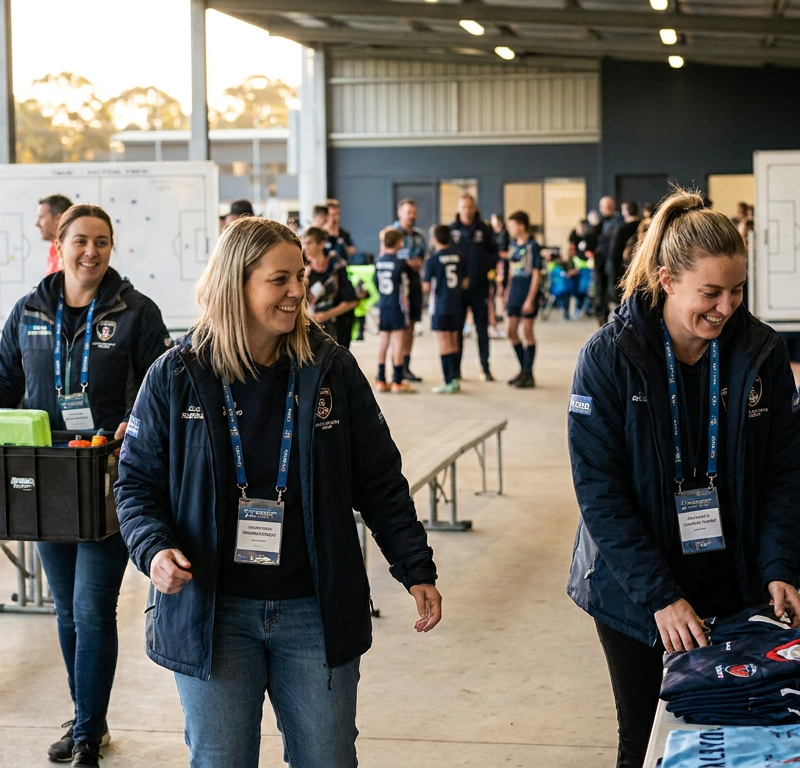
For many sports clubs, match days and major tournaments are the culmination of weeks of preparation. This is where the club's public face is truly tested, and where volunteer efforts must come together in perfect harmony. However, without a sharp and well-thought-out strategy for staff planning, a grand celebration can quickly turn into a logistical challenge where oversight is lost and volunteers burn out.
Managing a large group of people requires more than just a list of names. It requires an understanding of the dynamics that arise when pressure is high, and the ability to delegate responsibility so that everyone knows exactly what their task entails. In this article, we dive into how your club can optimize its staff planning and ensure that shifts are filled by motivated volunteers who want to return.
Structure Your Crew into Functional Zones
One of the biggest pitfalls in planning staff for large events is viewing volunteers as one large pool. To create an overview and ensure efficient operation, you should instead divide your needs into functional zones. Each zone should have a dedicated manager who acts as a link between leadership and the executing volunteers.
Zone Management in Practice
Consider dividing your staff planning into the following categories:
- Spectator Services: Ticket sales, entrance control, and wayfinding.
- Catering and Stalls: Sale of food and drinks, inventory management, and hygiene.
- Security and Logistics: Parking, crowd control, and access routes for players.
- VIP and Sponsors: Hosting in lounges, serving, and network facilitation.
By giving each volunteer a specific role within a zone, you reduce confusion. A volunteer in the sausage stand shouldn't have to worry about the parking lot; they need the peace of mind to focus on their core task. This creates a much better experience for both the volunteer and your guests.
Recruitment with a Focus on Competencies and Interests
When we talk about recruiting volunteers, it is often about survival: "Who can take a shift on Saturday?". But if you want a stable crew, you need to start looking at what the volunteers get out of it. People stick around when they feel they are using their skills correctly.
Take the time to segment your recruitment. Perhaps you have parents in the club who work in customer service daily – they are ideal for the entrance. Perhaps you have students who want experience with event coordination on their CV – give them responsibility for shift scheduling or logistics. By articulating the competencies the tasks require, you raise the status of volunteer work from a "duty" to an "opportunity."
Make it Easy to Say Yes
Many potential volunteers hold back because they are afraid of being "trapped" in a task they cannot manage. Therefore, be extremely specific in your postings. State time frames, requirements for prior knowledge, and describe exactly what the task involves. The more security you can create around a shift, the easier it is to recruit new staff.
Shift Planning: Avoiding Classic Bottlenecks
Good staff planning is about timing. A common mistake is having all volunteers show up at the same time. This creates bottlenecks at check-in and makes it difficult to give proper instructions to everyone.
Use Staggered Shifts
Introduce systematic shift rotations where areas of responsibility overlap. For example, have "Team A" show up an hour before kick-off, while "Team B" arrives 15 minutes before. This ensures that there are always experienced people in place when newcomers arrive, and that the handover happens smoothly without disrupting operations.
Also, recuerden to schedule breaks into your shifts. Even the most dedicated volunteer loses enthusiasm if they have to stand by a grill for six hours without a break. A well-thought-out shift plan includes time for the crew to get food, drink, and perhaps even watch a bit of the match. After all, it is the love for the sport that drives them.
Communication as the Foundation for Staff Care
When the day of the big event arrives, communication is your most important tool. Nothing kills motivation faster than a volunteer who is ready to help but doesn't know where to go or who to speak with.
Before the Event: Briefing and Aligning Expectations
Send a personal email or message to everyone on the staff list 3-4 days prior. Include a brief overview of:
- Meeting time and place (ideally with a map of the stadium/hall).
- Who they should contact upon arrival (shift manager).
- Dress code (e.g., club shirt or provided vest).
- Catering options during the shift.
During the Event: Accessibility and Support
Ensure that your leaders or zone managers are visible. They shouldn't necessarily solve the practical tasks themselves, but instead act as "firefighters" and support for the volunteers. If a conflict arises at the entrance or a machine breaks down in the cafe, volunteers must know exactly how to get help without leaving their post.
Evaluation and Recognition: The Path to Retention
Once the last spectator has gone home and the lights are turned off, the work with your staff is not over. In fact, the most important part of retention begins here. A quick thank you on the way out the door is good, but systematic initiatives make a bigger difference.
Reviewing Operations
Were all shifts covered? Where did queues form? Were there tasks where we underestimated the time consumption? Gather your zone managers the following day and take notes for next time. This ongoing optimization of staff planning ensures that you don't make the same mistakes twice and that your volunteers feel their working conditions are being taken seriously.
Social Recognition
Volunteers come for the cause, but they stay for the community. Consider hosting an annual "volunteer party" or simply marking small victories in the club's private groups. When someone sees their name highlighted for a special effort during staff care, they feel seen and valued. This is the social glue that makes recruitment easier next time, as the volunteers themselves become ambassadors for the club.
Conclusion: A Professional Approach to Volunteering
Managing staff and volunteers in a sports club requires the same level of oversight as in a commercial business, but with a much greater emphasis on empathy and motivation. By structuring your shifts, communicating clearly, and valuing the effort, you create a reliable machine that can handle everything from small training tournaments to major finals.
Remember that your volunteers are your most important resource. An investment in good staff planning and proper conditions for the crew is an investment in the club's future and your ability to grow as an organization.