Strategic Pricing and Differentiated Ticketing: The Path to Sold-Out Stands
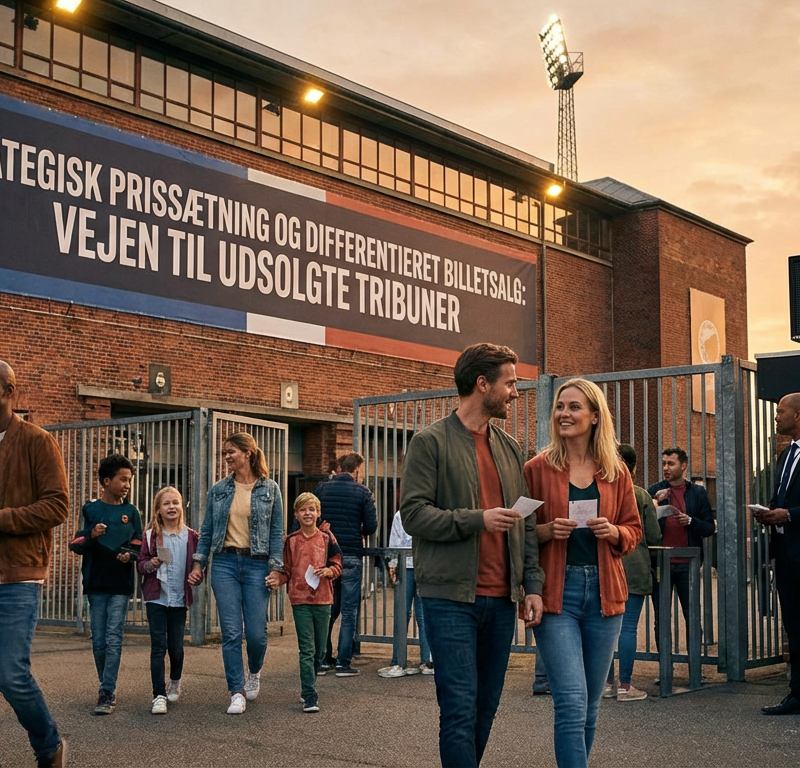
For many sports clubs, ticket sales are not just a practical necessity, but the very lifeblood of the club's economy and atmosphere. A full stadium creates a unique setting for players, sponsors, and fans alike, but the road to "sold out" requires more than just putting tickets up for sale. It requires a deep understanding of price psychology, segmentation, and the ability to convert one-time spectators into loyal season ticket holders.
Understand the value of your tickets
Pricing tickets is a balancing act between maximizing revenue and ensuring that the stands are filled. If the price is too high, you risk empty seats and a flat atmosphere. If the price is too low, the club misses out on vital income that could have been invested in talent development or facilities.
An effective strategy is to work with differentiated ticket prices. This means that you don’t just have one standard price, but instead divide the stadium into zones. A seat on the halfway line has a higher value than a standing spot in the corner. By offering different price categories, you make it possible for all segments – from the student to the business executive – to find a ticket that fits their budget.
Real-life example: Family zones and youth prices
Many clubs have great success with dedicating specific areas to families. Here, the ticket price can be lower, or you can offer "family packages" where two adults and two children receive a combined discount. This not only creates revenue here and now but is an investment in the fans of the future. When children have a good experience at the stadium early in life, the probability of them buying their own season ticket later is significantly higher.
Season tickets as a foundation for loyalty
While individual event tickets create liquidity around the big matches, the season ticket is the club's financial foundation. A sold season ticket is guaranteed income, regardless of whether it rains on match day or if the team is going through a difficult sporting period.
To increase season ticket sales, the club must focus on added value. It shouldn't just be a "volume discount" on individual matches. Consider including exclusive benefits such as:
- Pre-emptive rights for cup matches or European fixtures.
- Discounts in the club shop or at stadium concessions.
- Invitations to exclusive "fan evenings" with the coaching staff or players.
- The option to pass on your seat digitally if you are unable to attend, so the seat doesn't remain empty.
Subscription solutions: The modern way to steady income
More and more sports clubs are moving away from the traditional season ticket paid once a year in favor of a subscription model. Here, the fan pays a fixed monthly amount (e.g., £9 or £12). This lowers the barrier to entry, as it is easier for many to manage a small monthly amount rather than a large one-off expense at the start of the season. At the same time, it ensures a steady cash flow for the club all year round.
Digitalization of ticket sales: Making it easy to say yes
The biggest obstacle to effective ticket sales is friction. If a fan has to go through a cumbersome process with login requirements, confusing stadium overviews, or poor mobile displays, you risk them abandoning the purchase. The ticketing system must be intuitive and optimized for smartphones, as the majority of today's tickets are bought "on the go."
The integration of digital wallets like Apple Wallet or Google Pay is no longer just a luxury, but an expectation. Once a fan has purchased their event tickets, they should be available on their mobile immediately. This also reduces the pressure on ticket booths on match day itself and reduces the need for printed tickets, which is both cheaper and more environmentally friendly for the club.
Data-driven marketing of ticket sales
To optimize your ticket sales, you need to know your data. Who is buying the tickets? When are they buying them? And which channels are they coming from? By analyzing purchasing patterns, the club can target its communication.
If data shows that a large group of spectators often buy tickets for local derbies but never show up for weekday games against less high-profile opponents, you can target specific "3-match packages" to them. Here, you can include the big local derby along with two smaller matches at a favorable price. This helps level out demand and ensures visitors for the matches that are otherwise difficult to sell.
Retargeting: Capturing lost customers
Have you experienced someone adding tickets to their cart but never completing the purchase? Using simple retargeting via social media or email, you can send a friendly reminder. Perhaps they just didn't have their payment card handy, or they were interrupted. A small reminder saying "We have reserved your seats for 10 more minutes" can often be what it takes to close the sale.
Dynamic Pricing: The future of ticket prices?
In the aviation and hotel industries, dynamic pricing has been used for a long time, and it is now gaining ground in the world of sports. The concept is that ticket prices change based on supply and demand. If interest in a specific match is extremely high, the price increases gradually. Conversely, the price can be lowered to fill the last seats if sales are sluggish.
Although it can seem controversial, it can be implemented in a fan-friendly way by rewarding those who buy early ("Early Bird"). This creates an incentive for fans to secure their tickets well in advance, giving the club better opportunities to plan logistics, security, and catering on match day.
Creating a total experience around event tickets
Ticket sales are not just about the 90 minutes on the pitch. It’s about the entire experience from the moment the customer receives their confirmation email until they leave the stadium after the final whistle. By thinking in terms of "upselling," the club can increase the average revenue per spectator.
Give spectators the option to purchase a "food and drink voucher" directly in the purchase flow when they buy their ticket. This not only ensures additional sales but also reduces queues at the stalls, as the transaction has already been completed. Similarly, you can offer parking or access to a fan zone as an add-on.
Using volunteers to optimize the experience
Even though ticket sales are digital, the physical welcome is crucial. Make sure to have volunteer stewards ready at the entrances to assist with scanning digital tickets. If the technology fails for a fan, quick help should be available. A frictionless entry to the stadium is the best start to a good match experience and increases the chance of the spectator returning.
Conclusion: A strategic approach pays off
Effective ticket sales require a combination of technical understanding, data insight, and a sharp pricing strategy. By focusing on converting individual sales into season tickets and subscription schemes, the club creates financial stability that extends beyond sporting results.
The key is making it easy for fans to support the club. Whether it's through optimized mobile views, attractive family packages, or exclusive benefits for season ticket holders, it's about creating value. When the value is clear and the process is painless, ticket sales will follow – and your stadium will echo with the support of loyal fans week after week.