Strategic Club Administration: The Path to a Scalable and Robust Sports Association
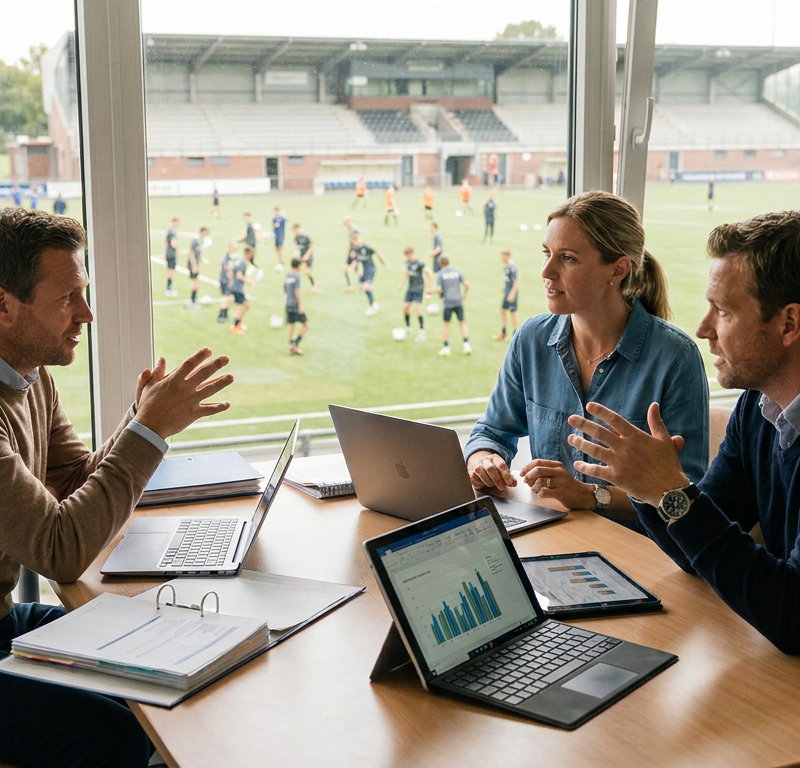
Club administration today is much more than simply taking minutes at board meetings and collecting membership fees. A modern sports club requires a professional approach to operations, resembling the management of a small business, though with the significant difference that most resources are driven by volunteer efforts. Without a solid administrative structure, the club risks losing momentum, draining volunteers of energy, and ultimately losing members.
To create sustainable club operations, it is crucial to look at how tasks are distributed, how communication flows, and how continuity is ensured when key individuals are replaced. This article focuses on best practices that elevate your club administration from a daily struggle for survival to a strategic engine for growth.
The Board's Role: From Operational Firefighting to Strategic Management
One of the biggest challenges in Danish club management is that the board often ends up spending 90% of their time on small operational tasks – such as ordering new balls or fixing a broken lighting system – instead of focusing on the club's long-term strategy. To optimize club administration, the board must function as strategic leadership.
Define Clear Areas of Responsibility
The first step toward a more professional administration is to develop precise job descriptions for each board member. It is not enough to have a chairman and a treasurer; you should have individuals responsible for specific verticals such as sponsors, volunteer care, IT infrastructure, and sporting development. By separating strategy (the board) from execution (committees or employees), you create more capacity at the top of the organization.
The Annual Cycle as a Management Tool
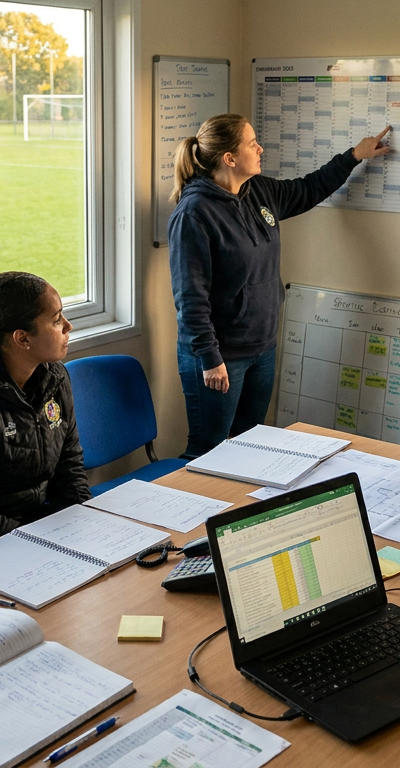
A structured administration works from an annual cycle that goes deeper than just match dates. A professional annual cycle includes deadlines for applying for municipal grants, times for sponsor audits, recruitment campaigns for volunteers, and coach evaluations. This ensures that management is always ahead of the curve and is not surprised by recurring tasks.
Digitalization of Club Operations: Eliminate Manual Data Entry
Effective administration is largely about eliminating "dead work." Many clubs still struggle with Excel sheets, loose emails, and manual bank transfers. Digitalization is not just a matter of technology, but about freeing up time for what matters: the sport and the community.
Centralization of Data
When information about members, sponsors, and finances is scattered across various private folders belonging to board members, a vulnerable organization is created. The best practice is to use an integrated club system where all data is gathered in one place. This ensures that the club complies with GDPR legislation and that knowledge does not disappear if a volunteer leaves.
Automation of Finances and Ticket Sales
Manual membership fee collections are one of the biggest time-wasters in Danish sports. By implementing automatic payment solutions, the treasurer can save hours every month. The same applies to ticket sales for tournaments or events. Digital solutions also enable better insight into the club's liquidity, making it easier for the board to make qualified decisions about investments in, for example, new facilities.
Volunteering in a Modern Context: Recruitment and Retention
Volunteers are the club's most important asset, but the way we engage volunteers has changed. The modern volunteer wants to help, but often in shorter intervals and within clear frameworks. The administration's task is to make it easy to be a volunteer.
Make Tasks Small and Manageable
Instead of searching for a "kiosk manager" for the entire season, break the task down into smaller pieces. The administration should act as a facilitator that has defined "task buckets." When a volunteer knows exactly what the task entails and that it has a clear end date, the likelihood of a "yes" is far greater.
Recognition and Culture
Good leadership in a sports club is also about creating a culture where the administration is seen as a support function for volunteers and coaches – not a controlling body. Regular communication, small everyday recognitions, and a transparent decision-making process are fundamental to maintaining engagement.
Optimizing Sponsorship Work and Revenue Streams
Healthy club administration also secures the club's financial foundation. Sponsorship work must not be a detached activity that only happens once a year. It must be an integrated part of club operations.
Systematic Sponsor Care
Many clubs forget their existing sponsors in the hunt for new ones. A professional administrative approach includes a CRM system (or a structured database) where all agreements, contact persons, and expiration dates are logged. By automating reminders for renegotiations and sending regular updates to sponsors about the club's successes, you significantly increase loyalty.
Diversification of Income
Beyond membership fees and sponsorships, the administration should look at other income opportunities such as merchandise sales, events, camps, or facility rentals. An effective administration has the processes in place to handle these extra activities without creating chaos in the bookkeeping.
Communication as the Binding Link
When administration runs smoothly, it is often because information flows unhindered. Internal communication between the board, coaches, and team managers must be structured. Using dedicated communication platforms rather than scattered Facebook groups or SMS chains ensures that all relevant parties receive the right information on time.
External Transparency
Members and parents expect professional communication. An updated website, a regular newsletter, and an active presence on social media are now part of the administrative task portfolio. It's about telling the club's story, which ultimately makes it easier to attract both members and volunteers.
Continuity and Documentation: Future-Proofing the Club
The biggest problem in many clubs arises during a generational change on the board. If everything is done "the way we usually do it" and all passwords only exist in the head of one person, the club is vulnerable.
Best practice is to maintain a digital "handbook" for club operations. This describes all administrative procedures: How do we apply for facility grants? How do we create new members? Who has access to the bank? Documentation ensures that new people can step in and continue the work without having to reinvent the wheel every time. This creates peace and stability that can be felt all the way out on the pitches.
Summary of Good Club Administration
The path to effective and professional club administration goes through structure, digitalization, and clear communication. By shifting focus from manual operations to strategic leadership, you can create a club that does not just survive, but thrives and develops. It requires an investment in the right tools and a willingness to change old habits, but the reward in the form of happier volunteers and a stronger economy is well worth it.