Physical events vs. digital platforms: Which networking strategy wins in the sports club?
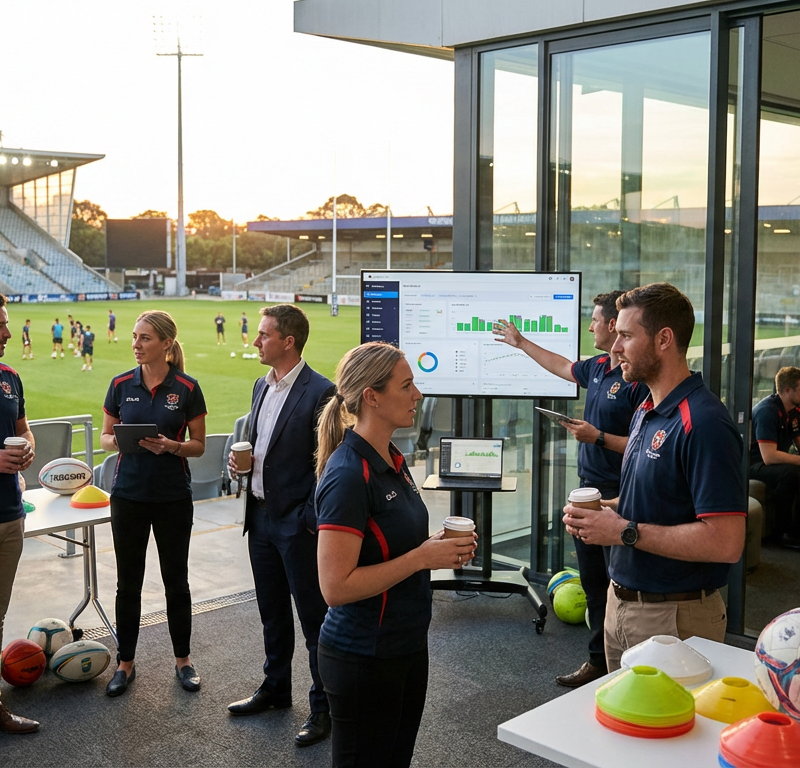
In modern sports clubs, sponsorship agreements are no longer just a matter of getting a logo on a jersey or a sign at the stadium. Today, sponsorship impact is measured largely by the relationships and business that the club can facilitate through its networks. But how do you create the best framework for this? Should you budget for large, physical events, or should you invest in digital platforms for networking?
In this article, we compare the two approaches: The traditional event focus versus the modern, platform-based networking model. We look at the advantages, disadvantages, and how the right combination can elevate your club's commercial value.
Physical events: The birthplace of relationships
Physical events have always been the cornerstone of sports clubs' business networks. This can range from classic morning meetings and sponsor shooting events to grand gala dinners or the VIP lounge on match days. The strength of these arrangements lies in the face-to-face meeting.
The benefits of personal attendance
When sponsors meet face-to-face, a level of trust develops that is difficult to replicate digitally. The informal environment surrounding a football match or a padel tournament makes it easier to lower guards and build genuine relationships. For the sports club, these events function as a strong activation tool where the club's DNA can be showcased.
Concrete examples of effective physical events include:
- Company visits: A sponsor opens their doors to the rest of the network, providing insight and exposure.
- Professional presentations: Experts are invited to speak about leadership, strategy, or marketing, adding direct value to the sponsor's own business.
- Matchday hospitality: Networking in informal settings before and after a match, where passion for the sport binds people together.
The disadvantages of the pure event model
While events are great at creating magical moments, they also have limitations. Firstly, they are time-consuming – both for the club to plan and for the sponsor to attend. If a sponsor misses a meeting, the value of that networking session is lost to them. Additionally, there is often a "post-event drought," where the energy created at the meeting dissipates as soon as people get into their cars.
Digital networking platforms: Continuity and data
In recent years, digital solutions for networking have gained ground. Here, the network moves into an app or an online portal where sponsors can find each other 24/7. This shifts the focus from individual touchpoints to a continuous stream of value.
The strength of digital networking
A digital platform acts as a search engine for your club's sponsors. If a carpenter needs an accountant, or an IT consultant is looking for a new car dealer, they can find each other with a few clicks instead of waiting for the next networking meeting. This significantly increases the likelihood of internal trade within the network.
Advantages of the digital approach:
- Measurable results: The club can see who is reaching out to whom, providing valuable data for use when renegotiating sponsorship deals.
- Equity: Smaller companies, who may not always have time for morning meetings at 07:30, still get access to the network and its members.
- Lightning-fast communication: The club can easily send push notifications or news directly to decision-makers without having to battle email filters.
Challenges with the purely digital approach
Without personal familiarity, a digital platform can quickly become "dead." If sponsors haven't met each other physically, they are less likely to respond to a message in an app. Engagement often requires a spark that is best ignited in the real world.
Comparison: Events vs. Platform
To understand how to best prioritize your resources, we can set up a comparison based on three critical parameters for success in a sports club's network.
1. Scalability
Physical events are difficult to scale. Every extra event requires more hands, more food, and larger premises. Digital platforms, on the other hand, are extremely scalable. Whether you have 20 or 200 sponsors in the app does not significantly change the club's workload. Here, the digital solution wins in the long run.
2. Depth of Relationship
Physical arrangements win big here. The trust that arises over a cup of coffee or by cheering for a goal together cannot be replaced by a profile text in an app. Events are the foundation upon which the subsequent digital dialogue rests.
3. Business Potential (ROI)
If the goal is the maximum number of transactions between sponsors, the combination wins. The platform makes it easy to find partners, but events make it easy to trust them. Without a platform, many potential deals never happen because sponsors forget who else is in the club once they are back at the office.
The Hybrid: The ideal strategy for the sports club
The most successful clubs today do not choose sides. They use a hybrid model where they let events and technology complement each other. It is about using technology to support physical meetings before, during, and after they take place.
Before the event: Preparation via data
Use your digital platform to let sponsors see the guest list in advance. They can mark who they would like to speak with, or even book short 1-on-1 meetings beforehand. This removes the awkward searching around the room and ensures everyone goes home with relevant contacts.
During the event: Interactive elements
During the event itself, digital tools can be used for polling, asking questions to speakers, or quick sharing of contact information via QR codes. This increases engagement and makes the experience feel more modern and professional.
After the event: Follow-up and retention
This is where many clubs fail. Once the guests have gone home, the dialogue must continue. A digital platform allows for sharing presentations from the meeting, photos from the day, and most importantly: an easy way for sponsors to follow up on the conversations they started over the buffet.
How does your club get started?
If your club currently focuses primarily on physical events, the first step is to look at how you can systematize your data. Here are three actionable steps:
1. Inventory of the network
Look at your current sponsor group. How do they communicate today? If it is primarily via email or not at all, there is great potential in introducing some form of digital member network.
2. Quality over quantity in events
Consider cutting down on the number of mediocre events and instead invest in fewer, but more exclusive arrangements where the value is sky-high. Use the resources freed up to implement a platform that secures value between these events.
3. Target your networking
Use knowledge from your arrangements to create "focus groups" in your digital universe. If you see that 10 of your sponsors are very interested in sustainability at an event, create a digital group for them where they can continue their discussions.
Conclusion
The choice is not between networking or events – it is between being a club that delivers random meetings, or a club that facilitates professional business development. Physical events are the heart of any sports club, as they create the emotional bonds upon which sport is built. But without digital support, you risk the value VIP evaporating between meetings.
By combining the magic of personal meetings with the efficiency and accessibility of a digital platform, you create a professional business network that sponsors cannot afford to leave. It is about making it easy for sponsors to be part of your club – whether they are at the stadium or behind their desk.