Optimize your club's workforce: Strategies for effective shift planning and operations
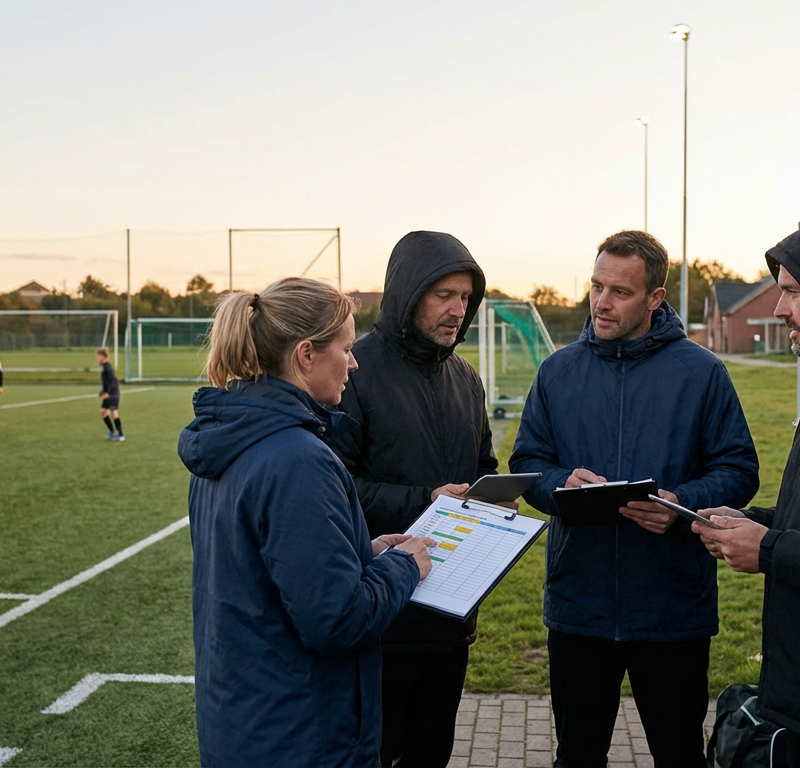
For many sports clubs, volunteers are the very foundation that keeps the wheels turning. But behind every successful match day or tournament lies a complex process involving workforce and staff planning. It is not just about finding hands, but about placing the right skills in the right positions at the right time.
In this article, we dive into how your club can professionalize workforce management. We look at the operational challenges of shift planning and how to create a structure that minimizes stress for both coordinators and the volunteers themselves.
Structure your workforce according to the nature of the tasks
One of the biggest mistakes many sports clubs make is treating all volunteers as a homogeneous group. In reality, different tasks require different types of planning. By categorizing your workforce, you can target your recruitment and shift planning much more effectively.
The core workforce
This is the heart of the club – coaches, team managers, and board members. Their "shifts" are often fixed throughout an entire season. Here, staff planning is about continuity and long-term agreements. It is important that these individuals feel ownership of their areas of responsibility so they do not burn out.
Event-based volunteers
This workforce is only activated during matches, tournaments, or social events. Here, flexibility is the keyword. Shifts are short, and the need fluctuates wildly. To manage this group effectively, you need a system that can quickly scale up when 20 helpers are suddenly needed for a sausage stand or ticket control.
Strategic shift planning: From chaos to overview
Shift planning is often the greatest source of frustration in club administration. If you are still using Excel sheets sent back and forth via email, errors, double bookings, and a lack of overview regarding vacant positions quickly arise.
A modern approach to staff planning involves transparency. The earlier a shift plan is ready, the higher the chance that volunteers can fit it into their calendars. A good tip is to break shifts down into smaller chunks. An eight-hour shift at a tournament seems overwhelming, while two four-hour shifts are often much easier to fill.
Self-service increases motivation
Experience shows that volunteers are more engaged when they have influence over their own shifts. By giving the workforce the opportunity to log in and choose their preferred time slots or tasks, you remove a heavy administrative burden from the club's volunteer coordinator. This creates a sense of autonomy that is worth its weight in gold in a volunteer culture.
Handling "No-shows" and labor shortages
Even the best planning can be hit by last-minute cancellations. Workforce management is also about having a backup plan. Here, it is essential to have an updated database of former volunteers who can be contacted quickly.
To avoid no-shows, communication is crucial. Automatic reminders via SMS or email 24-48 hours before a shift significantly reduce forgotten appointments. It's about making it as easy as possible for the volunteer to remember their commitment.
Competence-based staff planning
When we talk about workforce in the world of sports, we often forget to look at specific competencies. It makes no sense to have a person with extensive IT experience pumping balls if the club's website or ticketing system is malfunctioning at the same time.
Try creating a "competence mapping" of your volunteers. Do you know what your members and parents do for a living? By matching tasks with the volunteers' professional skills, you increase the value for the club and satisfaction for the individual. An accountant might rather help with the annual accounts than stand in the kiosk, and a carpenter might rather help maintain the clubhouse.
Real-world example: Cup execution
Imagine a large youth tournament. This requires everything from referees and first-aiders to parking attendants and kiosk staff. If you use one large list for all staff, you lose the overview. By dividing the workforce into functional teams, each with its own team leader, you can decentralize responsibility. The team leader has direct responsibility for shift planning within their area, which relieves the main coordinator.
Retention through professional operations
Volunteers rarely leave a club because they no longer want to support the cause. They often leave because the organization seems messy or because they feel their time is being wasted. Good workforce management is therefore the best form of retention.
When a volunteer shows up for a shift, they should know exactly:
- Where they need to be.
- Who their contact person is.
- What their exact tasks are.
- When they have a break and when they finish.
Evaluating the workforce effort
After major events or at the end of the season, it is important to evaluate the staff planning. Were there too many people working in the kiosk during quiet hours? Were there too few stewards at the entrance when the pressure was greatest? By analyzing data points such as hourly sales figures versus the number of staff on duty, you can optimize next year's planning financially and time-wise.
Also, ask the volunteers about their experience. Were the shifts too long? Were the instructions clear enough? This feedback is invaluable for refining your processes regarding workforce and operations.
Conclusion: The future of workforce management is digital and data-driven
The time when you could manage a sports club solely with a notepad is over. Demands for efficiency and documentation are increasing, even in the volunteer world. By implementing systematic approaches to your workforce and staff planning, you remove barriers to engagement.
When processes surrounding shifts, recruitment, and communication run smoothly, there is more time for what it's all about: the sport, the community, and the experiences on the field. By investing time in structuring your workforce today, you ensure the club's survival and growth tomorrow.