How to structure the optimal ticket sales in your sports club: A practical guide
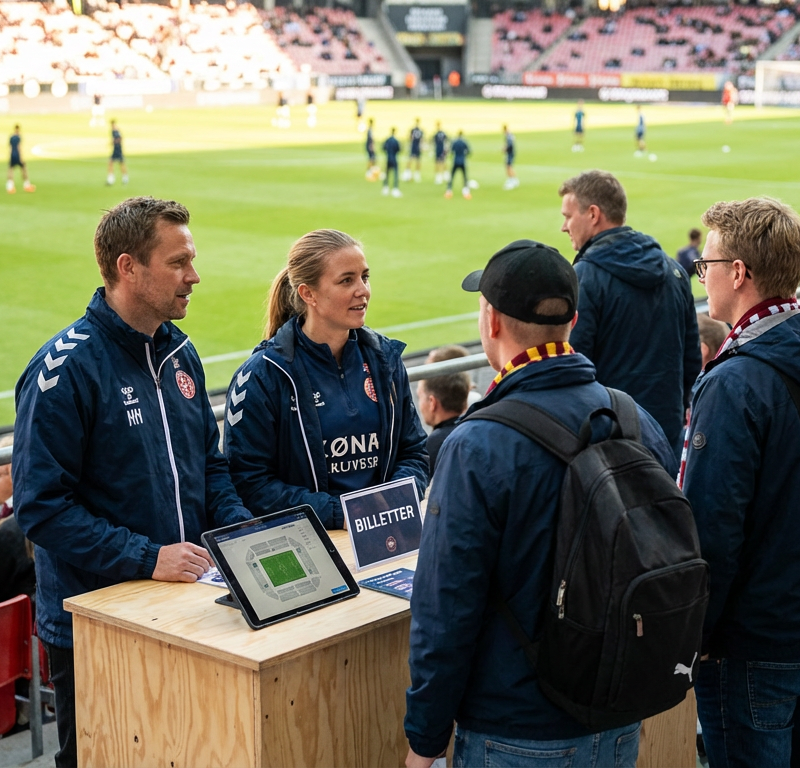
Ticket sales are much more than just exchanging cash for an admission slip at the entrance. For modern sports clubs, ticket sales are the engine of the club's finances and the first point of contact with fans and spectators on match day. An efficient process for selling tickets and season tickets can not only increase revenue but also significantly reduce the administrative burden on volunteers.
In this guide, we delve into the technical and strategic aspects of ticket sales, so your club can create a professional framework around your events. We look at everything from pricing strategies to the digital infrastructure required to handle large volumes of spectators efficiently.
Establishing a digital infrastructure for ticket sales
The first step toward a professional setup is moving ticket sales online. Although gate sales are still relevant for many smaller clubs, online ticket sales offer a range of unique advantages that physical sales can never match. Firstly, the club gains access to data about its fans, which is essential for future marketing and sponsorship deals.
When choosing a system for your event tickets, you should focus on user-friendliness. Fans should be able to purchase their admission with a few clicks on their mobile. The system should be able to handle both single tickets and the more complex season tickets, which often require some form of validation at every single home game.
Automation saves time for volunteers
One of the biggest challenges in amateur and semi-professional sports is the lack of hands. By digitizing your ticket sales, you eliminate the need for manual handling of lists, cash, and physical tickets that need to be sent by mail. A digital system automatically sends confirmations and tickets to the buyer's email or phone, freeing up time for other important tasks in the club.
Strategic pricing of tickets and season tickets
Ticket pricing is a balancing act between the club's need for income and the fans' willingness to pay. It is important to differentiate prices to reach different target groups. Consider dividing your prices into categories such as adult, senior, student, and children.
Many clubs have success with "Early Bird" concepts, where event tickets are cheaper if purchased well in advance of match day. This not only creates early liquidity for the club but also gives an indication of how many spectators are expected, making the planning of security and concession sales easier.
Season tickets as a foundation for loyalty
The season ticket is perhaps the club's most important product. It secures a fixed income early in the season and guarantees a certain number of spectators at every match, regardless of the weather or the team's performance. When pricing a season ticket, the calculation should be simple: it must be noticeably cheaper to buy a season ticket than to buy single tickets for all matches.
Example: If a single ticket costs 100 DKK and there are 15 home games, a season ticket should be around 900-1100 DKK. Here, the fan saves money, while the club secures loyalty and capital upfront.
Optimizing the match day experience at the entrance
Nothing ruins a fan's mood like a long queue at the entrance 10 minutes before kickoff. Efficient scanning of tickets is therefore crucial. Modern solutions allow scanning via smartphones, meaning the club's volunteers can simply use their own devices or low-cost scanners to validate the many event tickets.
It is a good idea to have a separate queue for season ticket holders. This gives the most loyal fans a sense of exclusivity (a "fast track" experience) and spreads the pressure on the entrance area, so those who need to buy tickets on the day do not block those who already have their admission ready.
Handling complimentary tickets and sponsors
Sponsorship deals almost always include a number of tickets for each match. It can be a logistical challenge to keep track of who has received what. By using a professional ticketing system, you can assign unique codes to each sponsor, which they can redeem online themselves. This ensures that you have control over the capacity in the hall or stadium, and that sponsors receive professional service without manual intervention from the club's administration.
Marketing tickets and increasing conversion
Ticket sales do not happen by themselves; they require visibility. The integration between your ticket sales and social media is crucial here. When you announce an upcoming match on Facebook or Instagram, there should be a direct link to the purchase page for event tickets.
Use "retargeting" if possible. If a person has visited your ticket page without buying, small reminders on social media can often be what gets them to complete the purchase. Additionally, you should utilize your existing database. Send an email to everyone who bought tickets for the previous match with a personalized offer for the next one.
Create scarcity and relevance
People react to scarcity. If you have a match with limited capacity or a special local derby, communicate it clearly. "Only 100 tickets left" is a powerful trigger for ticket sales. For season tickets, you can run campaigns with a deadline: "Buy before August 1st and get a free club scarf included in the price."
Data collection and evaluation
After each match, you should analyze your data. Which ticket types sold best? What time of day or week were most tickets purchased? Were there many who only bought tickets at the entrance?
This knowledge is worth its weight in gold when planning next season's ticket prices and marketing budget. If data shows that 80% of your spectators are families with children, your focus might need to be on family packages rather than individual tickets. If many buy at the last minute, you might consider raising the price at the door to force more sales into pre-sales, which eases planning.
Future-proofing the strategy
The world of sport is changing, and so is consumer behavior. By building a solid structure around your ticket sales today, you ensure that the club is ready to scale, whether you move up the ranks or want to introduce new initiatives like subscription-based season tickets or VIP packages.
Remember that every single ticket sale is an opportunity to get to know your fans better. The more you know, the better an experience you can create – and the stronger the club stands financially for many years to come.