How to Create Value with Networking and Events in Your Sports Club
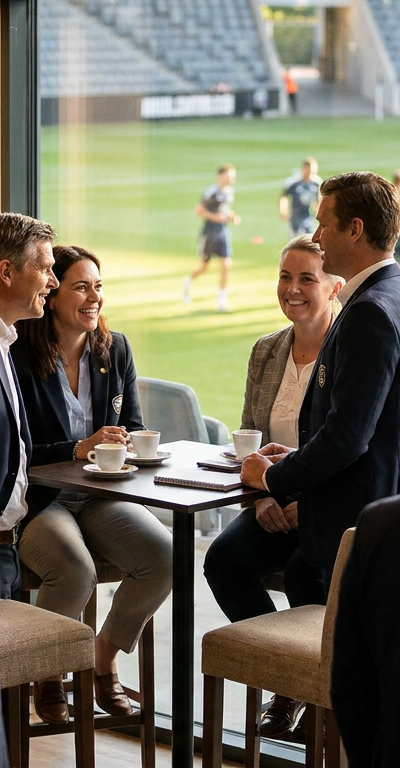
For many sports clubs, sponsorship revenue is the lifeblood that secures everything from new balls to professional coaching staff. However, in a modern business climate, a logo on a sign is rarely enough to retain ambitious companies. Sponsors today seek relationships, visibility, and – most importantly – business opportunities. This is where a strategic focus on networking and events becomes crucial.
By transforming the club from being merely a sporting entity into a platform for networking, you create added value that extends far beyond the 90 minutes on the pitch. This article guides you through how to structure your events and facilitate engagement that makes your club indispensable to the local community and the business sector.
Why networking is the future of sponsor care
Traditional sponsorship was often regarded as a form of philanthropy or local support. While local commitment is still a driving force, we see a clear trend toward "Business-to-Business" (B2B) networking in sports clubs. Companies want to meet other decision-makers in an informal context where the values of sport, such as team spirit and a winning mentality, set the stage.
When a club facilitates a strong network, the focus shifts from the price of the sponsorship to the value of the relationships the sponsor gains. If a local master carpenter finds his new regular supplier through the club's business network, the sponsorship suddenly becomes an investment with a direct return on investment (ROI), rather than an expense.
Creating the framework for a good meeting
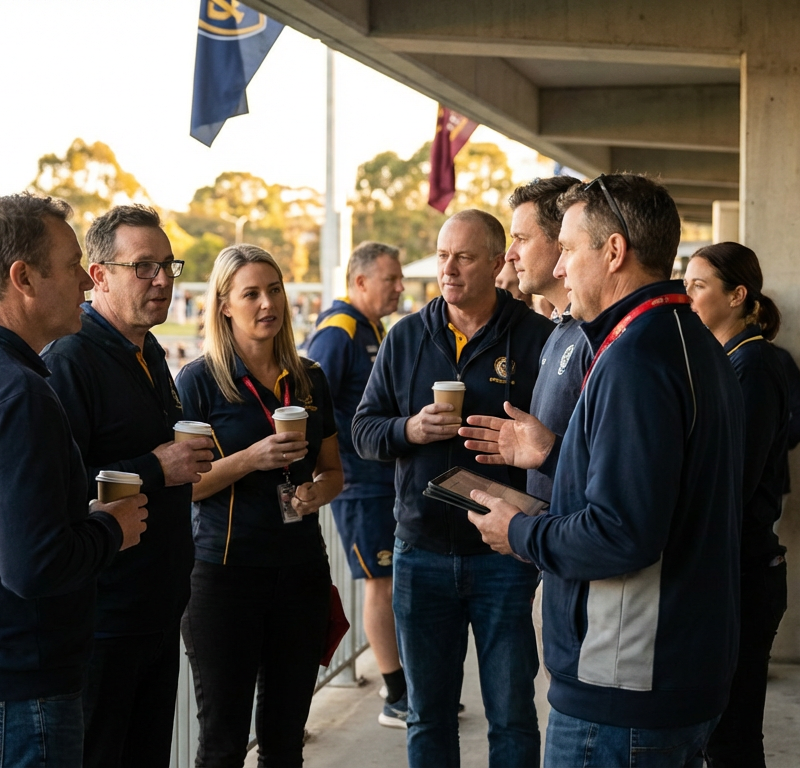
A successful network rarely arises on its own just by serving coffee during the break. It requires structure. Consider dividing your networking activities into different formats:
- Morning networking: Early meetings (e.g., 07:30 - 09:00) with a focus on knowledge sharing and short presentations.
- Matchday events: VIP arrangements before or after a game, where the sporting excitement is used as a catalyst for conversation.
- Company visits: Let sponsors host an event so they can showcase their business to the other members.
Planning events that create engagement
Events are not just for sponsors; they are also for members, volunteers, and fans. Engagement is the keyword here. An event should give participants a feeling of being part of something bigger.
When planning your events, you should always ask the question: "What is the success criterion for the participant?". For a parent of a youth player, it might be social interaction with other parents. For a sponsor, it might be three new leads. By differentiating your events, you ensure that all target groups feel seen.
Examples of value-adding events
Take inspiration from clubs that have successfully thought outside the box:
- Sponsor Cup: An annual tournament where sponsors enter teams consisting of their employees. This creates internal teambuilding within the company and strong relationships across the club's partners.
- Guest Speaker Evenings: Invite a former elite player or a local business leader to talk about leadership, motivation, or mental health. This attracts people who might not normally visit the stadium.
- Volunteer Gala: An appreciation event dedicated to those who keep the club running. This strengthens volunteer retention and creates a positive narrative about the club's culture.
Networking in practice: Facilitation is the key
The biggest mistake many clubs make is believing that networking happens automatically when people are in the same room. As a club leader or networking manager, your role is to be a "matchmaker."
Use your knowledge of the sponsors actively. If you know that the local accountant is looking for new premises and the real estate agent in the network has just listed a commercial property, bring them together. This proactive approach makes the network vibrant and results-oriented.
Using technology to help
In a busy daily life, it can be difficult to manage registrations, dietary requirements, and participant lists manually. Use digital tools to professionalize the process. A simple registration page and a visible participant list make it easier for participants to prepare for who they would like to talk to at the next event.
Measuring success and continuous optimization
To ensure that your efforts regarding networking and events bear fruit, you must evaluate them continuously. It is not just about the number of tickets sold or sponsors attending, but about the quality of the experience.
Relevant metrics (KPIs):
- Retention rate: How many sponsors renew their agreement after participating in the network?
- Attendance frequency: Is it the same 5 people coming every time, or do you manage to engage broadly?
- Networking value: Ask your sponsors directly: "Have you done business or gained valuable relations through the club in the past year?"
By collecting feedback after each event, you can quickly adjust your course. Perhaps the breakfast meetings are too long, or perhaps sponsors are requesting more time for free networking over long presentations. Listen to your users; they are the ones building the club's foundation.
Marketing your events
Even the best event will fall flat if no one knows about it. Use the club's channels strategically. LinkedIn is often overlooked in a sports club context, but it is the ideal place to promote business events and showcase the success stories from the network.
Create small "portraits" of the network members, share photos from successful events (with permission), and highlight the concrete results that the network creates. This attracts new potential sponsors who want to be part of the success.
Create an annual calendar
Predictability is important for business owners. If you present a fixed annual calendar for your networking meetings and events as early as January, sponsors can plot them into their calendars immediately. This sends a signal of professionalism and respect for their time.
Conclusion: From club to platform
Mastering the discipline of networking and events takes time, but the rewards are enormous. When you manage to create an environment where people want to meet – whether it is to watch sports, create business, or make a difference for the youth – you create a robust club economy and a strong local community.
Remember that the best events are those where the heart is involved, but where the strategy lies in the background ensuring that everyone takes value home. Start small, be consistent, and focus on creating good relationships. It is within strong networks that the sports clubs of the future are built.