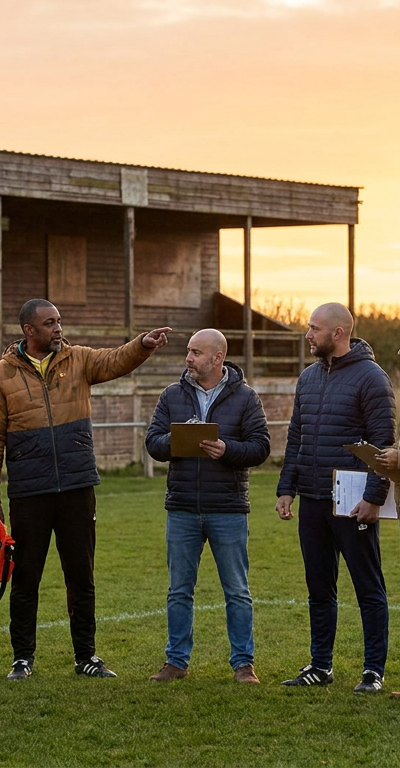
How to build a scalable staffing structure: From emergency help to steady operations
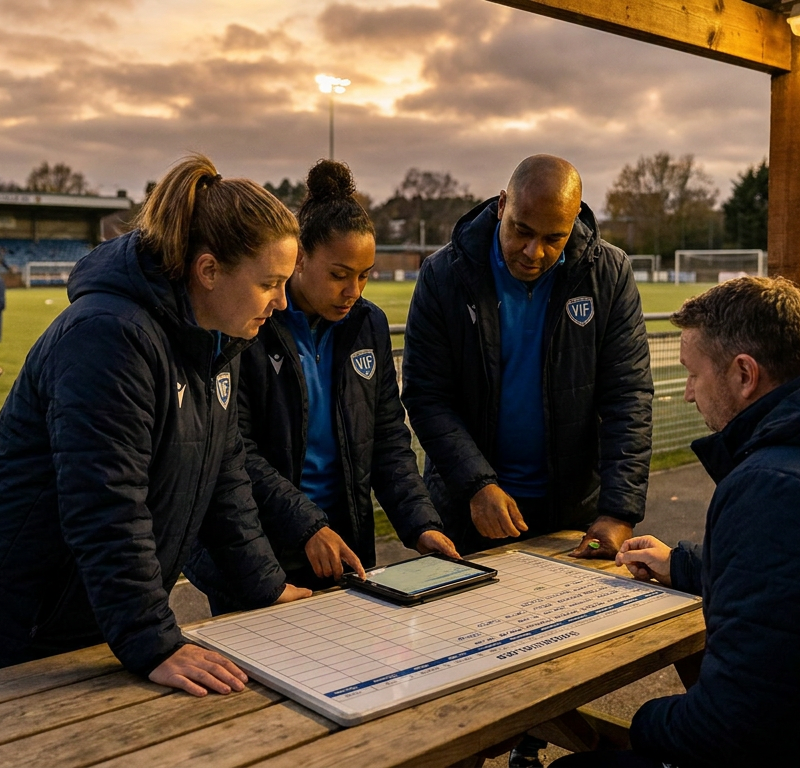
Every sports club, whether it is a local football club or a large elite organization, is driven by human resources. But all too often, work with volunteers and staffing ends up as a fire-fighting exercise, where the board or employees have to take the heavy shifts at the last minute because the plan didn't hold. To create healthy club operations, it requires a transition from ad-hoc solutions to a scalable staffing structure.
This article guides you through how to professionalize your personnel planning and create a system that not only recruits volunteers but also ensures that the right skills are present at the right times.
Define your staffing needs: The three layers in the club
Before you start looking for volunteers, you need to know exactly what you are looking for. Many clubs make the mistake of saying: "We need help". That is too vague. Instead, you should divide the club's staff into three categories to target your recruitment and personnel planning:
1. Daily operations (Core tasks)
These are the volunteers who carry the club week after week. Coaches, team managers, and treasurers. Here, continuity is more important than volume. Personnel planning here is about long-term agreements and clear job descriptions.
2. Recurring shifts (Service tasks)
This covers kiosk shifts on match days, ticket sales, or stadium cleanup. Here, the challenge is often the number of hours that need to be covered. These tasks require a strong system for shift planning, where volunteers can easily see when there are open slots.
3. Event-specific staff (Peak loads)
For large tournaments, concerts, or promotion matches, the club needs a massive effort over a few days. Here, you must be able to scale your staff quickly, which requires a database of "occasional volunteers" who might only want to help once a year.
Recruitment based on motivation rather than duty
The classic mistake in many sports clubs is to recruit based on "bad conscience". You send out an email saying the club might have to close if no one signs up. That rarely creates an engaged workforce. To create sustainable recruitment, you must focus on what the volunteer gets out of it.
Consider segmenting your recruitment according to these target groups:
- The young: Often looking for experience for their CV. Give them responsibility for social media or event coordination, and offer them an official recommendation after the season.
- The parents: Want to be close to their children's activities. Make it easy for them to take a shift while the child is training.
- The retirees: Often seeking social interaction and a feeling of making a difference. Here, the community around the task is more important than the work itself.
Effective personnel planning: Make it easy to say yes
The barrier to becoming a volunteer is often uncertainty about the time commitment. If a person doesn't know if a shift lasts two or six hours, or exactly what they need to do, they often end up saying no. Professional personnel planning is about removing all friction.
Create modular shifts
Instead of asking for help for "the tournament all Saturday", break the day up into modules of 2-3 hours. It is much easier for a busy family to find two hours to grill sausages than it is to set aside an entire day. A digital overview of shifts makes it possible for volunteers to "shop" for the times that fit into their calendar.
Clear "Playbooks"
When a volunteer shows up for their shift, there should be a clear instruction. Where are the keys found? How does the cash register work? Who do you contact in case of problems? If the staff feels equipped for the task, the chance of them signing up again is significantly higher.
Digitization of shift management and communication
Managing staff via Excel sheets or loose Facebook groups quickly becomes unmanageable as the club grows. To optimize operations, you should consider a system that centralizes data.
A central system for shift planning provides several advantages:
- Automatic reminders: The system sends an SMS or email the day before a shift, which significantly reduces no-shows.
- Internal swapping: Let volunteers swap shifts among themselves in the system without the board having to act as an intermediary.
- History: See who has helped the most, so you can target your recognition and thank-you letters after the season.
Retention: How do we keep our staff?
It is always cheaper and easier to retain an existing volunteer than to find a new one. Retention is largely about recognition and culture. Staff care in a sports club is not salary, but rather perceived value.
Create a "Crew community"
Ensure that your staff feels like part of a team. This can be done through small initiatives like a dedicated "Crew" shirt, free coffee and food during the shift, or an annual volunteer party. When people feel they are part of an exclusive group, their loyalty to the club increases.
The feedback loop
Ask your staff after an event: "What worked? What was frustrating?". When volunteers see that their feedback leads to improvements in future shift plans, they feel heard and valued. It shows that their time is being respected.
Everyday example: From chaos to control
Imagine a local handball club that holds a large youth tournament every year. Previously, the tournament manager spent weeks calling around to beg people to take shifts. The result was often tired parents and a stressed leadership.
The club chose to change strategy. They created an online portal where all shifts were posted three months in advance. They defined exactly what each shift involved (e.g.: "Kiosk shift: Sale of water and fruit. You do not need to be able to cook"). Then they sent a targeted message to all members, explaining that the profit from the tournament would go directly toward lowering membership fees for the next year.
By making the need visible, the tasks manageable, and the result tangible for the individual member, 90% of the shifts were filled within the first two weeks. The remaining personnel planning could then be focused on the few critical gaps rather than general panic.
Summary: The path to stronger staff care
Managing volunteers and staff in a sports club is one of the most complex management tasks there is, because it rests on desire rather than duty. By structuring your needs, digitizing your shifts, and focusing on the good experience for the individual volunteer, you can create a self-sustaining organization.
Remember that the foundation for good staff care always starts with an overview. When you know who you are missing, when they are needed, and how to thank them afterwards, the volunteers often follow naturally.