Guide to Healthy Finances in the Sports Club: From Budgeting to Member Payments
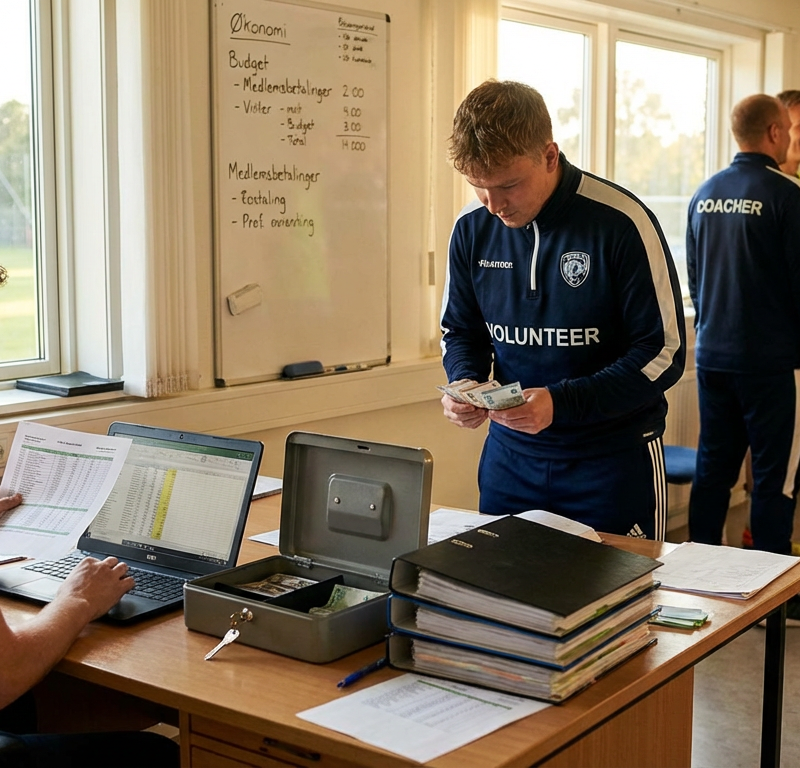
Finances are the engine of any sports club. Without a solid financial foundation, it is difficult to realize sporting ambitions, maintain facilities, or create the framework that members expect. Nevertheless, many clubs find that financial management occupies a significant portion of daily volunteer work and often feels like a heavy administrative burden.
In this guide, we dive into how sports clubs can professionalize their finances. We look at everything from initial budgeting to effective invoicing and strategies for increasing the club's total income. The goal is to create a transparent and sustainable financial model that provides the peace of mind to focus on what it's all about: the sport and the community.
Create a Realistic Budget That Holds Up
The first step toward healthy finances is a thoroughly prepared budget. A budget is not just a document for the general assembly; it is the club's management tool throughout the season. To create a realistic budget, one should start by looking back at the previous two to three years to identify fixed patterns in expenses and income.
Categorizing Fixed and Variable Costs
Start by mapping out fixed costs. These are items such as rental of halls or pitches, insurance, federation licenses, and subscriptions to administration systems. These are often easy to predict.
Variable costs require more attention. What does it cost to send a team to a tournament at the other end of the country? How much do referee fees increase if the first team is promoted? By working with realistic estimates and including a small buffer for unforeseen expenses, the club avoids unpleasant surprises mid-year.
Automating Invoicing and Membership Fees
Many clubs struggle with missing payments because the invoicing process is manual and confusing. Manual invoicing not only takes time away from volunteers but also increases the risk of errors and forgotten charges.
By implementing a system for automatic invoicing, the club can ensure that membership fees are sent out on time. This provides better liquidity, as money flows steadily into the account. Modern solutions often allow members to register their payment cards so that future charges occur automatically. This reduces the need to send reminders and makes it easier for members to be part of the club.
Handling Arrears
Even with the best system, there will be members who forget to pay. Here, a fixed procedure is crucial. Instead of having a volunteer spend hours making phone calls, you should have an automated flow of reminders. This removes personal discomfort and ensures the club treats all members equally.
Diversifying the Club's Income
A sports club must never be dependent on just one source of income. If 90% of income comes from membership fees, the club is vulnerable to member churn. A strategic approach to finances, therefore, involves finding multiple pillars to stand on.
Sponsorships and Partnerships
Sponsorship income is often the largest source of growth. But to attract sponsors, the club must be able to document the value of the partnership. It's not just about a logo on a jersey; it's about exposure on social media, networking events for the business community, and the opportunity to support the local community. By professionalizing materials for potential sponsors, the club can significantly increase its income.
Events and Fundraising
Tournaments, summer parties, and flea markets are classic examples of revenue-generating initiatives. But don't forget new digital opportunities. Many clubs find success with online fundraisers, selling merchandise through a webshop, or signing up for support schemes through utility companies and fuel cards. These small streams quickly become a large river if managed effectively.
Effective Management of Daily Payments
When we talk about payments, it's important to make it as easy as possible for the people who use the club. In a busy day-to-day life on the pitch or in the clubhouse, it should be easy to buy a cup of coffee or pay for a new set of training clothes.
The club should consider:
- Mobile payment solutions in the kiosk to avoid handling cash.
- Digital punch cards for the cafeteria that can be purchased via the club's website.
- Options for online payment when signing up for events and social gatherings.
The fewer steps there are between the member and the payment, the greater the likelihood that the money actually ends up in the club treasury.
Transparency and Financial Reporting
Trust is paramount when managing other people's money. The sports management and the board must have ongoing insight into the club's finances. This means the bookkeeping must be kept up to date so that a status report can always be generated.
The financial officer should present a brief status at every board meeting: Are we sticking to the budget? Are there unexpected deviations? How is the income from grants and foundations looking? By having this dialogue continuously, the board can react and adjust course before a small challenge grows into a large hole in the budget.
Applying for Grants and Funding
Many clubs miss out on thousands of dollars because they don't prioritize searching for foundations and municipal grants. Support is available for everything from energy renovations of the clubhouse to integration initiatives or the purchase of new equipment. Financial management also involves setting aside time to research these opportunities and write targeted applications.
Summary: The Path to Stronger Club Finances
A professional approach to the club's finances is not about turning sport into a business, but about ensuring the club's survival and growth. By focusing on realistic budgets, automating invoicing, and thinking creatively about income, you can free up resources. Money that previously went to the administration of member payments can instead be used for coach education or better equipment for young players.
Remember that finances are a shared responsibility. When everyone in the club understands the importance of paying on time and supporting the club's revenue-generating activities, a culture is created where the community can thrive and develop for many years to come.