Guide: Integrating Networking and Events into the Sports Club's Core Business
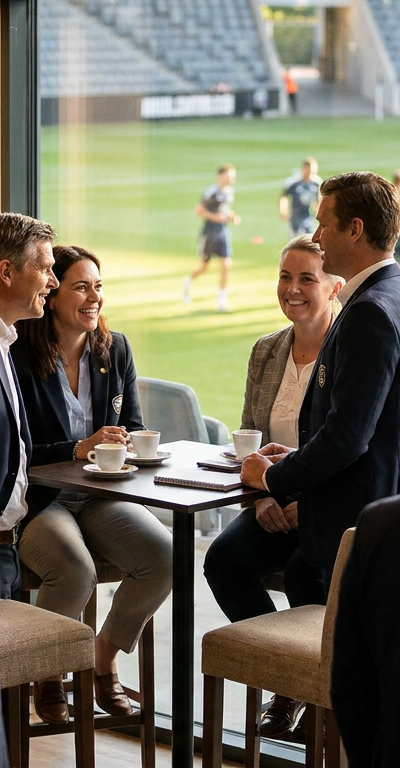
For many sports clubs, the leap from having a series of loyal sponsors to running a professional business network is a crucial milestone. It is no longer just about exposure on a perimeter board or player jerseys; it is about creating a platform where companies can do business with each other under the club's wings. To succeed in this, a structured approach to both networking and events is required.
A successful strategy for networking and events is based on the club's unique DNA. Sport is the "glue" that binds people together, but the professional framework is what ensures businesses continue to invest year after year. In this guide, we will go through how to build a robust structure that ensures high engagement and concrete results for your partners.
Define the purpose of your network
Before you send out the first invitation, you must have complete clarity on why your network exists. Is it a pure "business-to-business" network with a focus on direct sales, or is it a knowledge-sharing network where inspiration and personal relationships are paramount? Most successful sports clubs land on a combination, but the weighting is important for your planning.
A concrete example could be a local handball club that chooses to divide their network into two tracks: "Morning Networking" with a focus on speed-networking and leads, and "Matchday Hospitality" with a focus on experiences and informal relationship management. By distinguishing between these, sponsors know exactly what they get out of attending individual events.
Designing events that promote networking
An event in a sports club is not just about serving a sausage and showing a match. To promote networking, the physical framework and the program itself must be actively facilitated. Passive participants are rarely converted into active ambassadors if they are just allowed to sit in the same corner with the same two people they already knew.
Facilitated contact
Use a "seating plan strategy". If you know that two companies in your network could benefit from talking to each other – for example, a master carpenter and a local architect – then make sure they sit next to each other at lunch. As the club's networking manager, your most important task is to be a "matchmaker".
Variation in format
Events do not always have to take place in the clubhouse. Consider formats such as:
- "Behind the scenes": Visits to one of the network's larger member companies.
- Professional presentations: Invite an expert to speak about digitalization, management, or recruitment.
- Active events: A padel tournament or a golf trip can often loosen up the conversation in a different way than a meeting room.
Create engagement before, during, and after your events
Engagement is not something that only happens during the two hours an event lasts. It is a process that starts weeks before. It is about building anticipation and ensuring that the value of the network is carried forward after the guests have gone home.
Before the event: Send out a participant list to all registered attendees three days in advance. This gives sponsors the opportunity to see who they want to talk to, and they can prepare. It shows professionalism and signals that you take their time seriously.
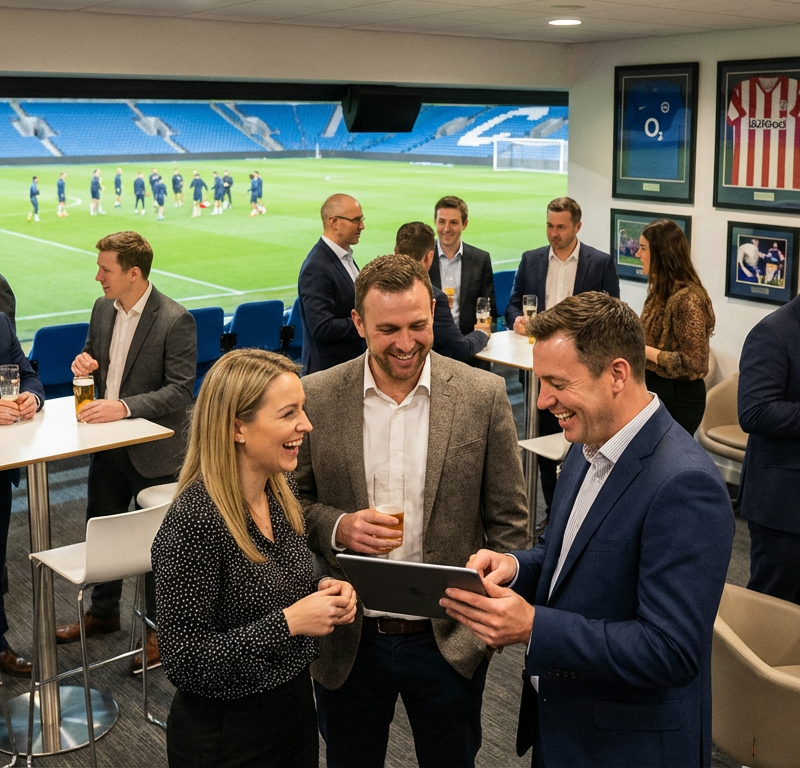
During the event: Ensure there is a visible host. A person from the club (the sponsorship manager, a board member, or an external facilitator) should welcome guests, introduce new members, and ensure that no one is standing alone. A good rule of thumb is that no one should stand alone for more than two minutes before someone from the club makes contact.
After the event: Follow-up is the point where most clubs fail. Send a "thank you for coming" email the day after with photos from the day, links to the speakers' material, and potentially a "save the date" for the next event. This keeps the momentum going and makes it easier for sponsors to justify their investment.
Measuring success in the network
How do you know if your networking meetings and events are actually working? In the world of sports, we often look at points on the scoreboard, but in the business network, we need to look at other parameters (KPIs).
Quantitative parameters
- Attendance frequency: What percentage of your partners actually show up?
- Retention rate: How many sponsors renew their membership in the network each year?
- Guests: How many new potential sponsors do your current members bring to your open events?
Qualitative parameters
You get qualitative data through direct dialogue or short surveys. Ask specifically: "Have you had specific business dialogues as a result of the last networking meeting?" or "Which topics will create the most value for your business in the coming quarter?". This shows your partners that you are listening and continuously adapting your events to their needs.
Synergy between sport and business
The unique thing about networking in a sports club is the emotional connection to the team and the club's results. Take advantage of this in your events. Let the head coach give a short tactical briefing before the match, or let the sporting director talk about the strategy for talent development. This creates an "insider feeling" that they cannot get anywhere else.
When a sponsor feels like part of the club's inner circle, they become not just financial contributors, but ambassadors. This loyalty makes it possible to maintain a strong network, even during periods when sporting results might falter. This is where strong relationships and well-planned events truly show their value.
Summary: The common thread in your networking
Running successful events and networks in a sports club requires persistence. It is not a one-off effort, but an ongoing process. By having fixed formats, facilitating contact between members, and ensuring professional follow-up, you create a foundation that attracts and retains businesses.
Remember that every single event is an opportunity to prove the value of the club's sponsorships. When companies feel that they receive relationships, knowledge, and business opportunities in return, your role as networking manager becomes significantly easier, and the club's financial foundation becomes correspondingly stronger.