From Deficit to Surplus: The Ultimate Guide to Effective Club Income Management
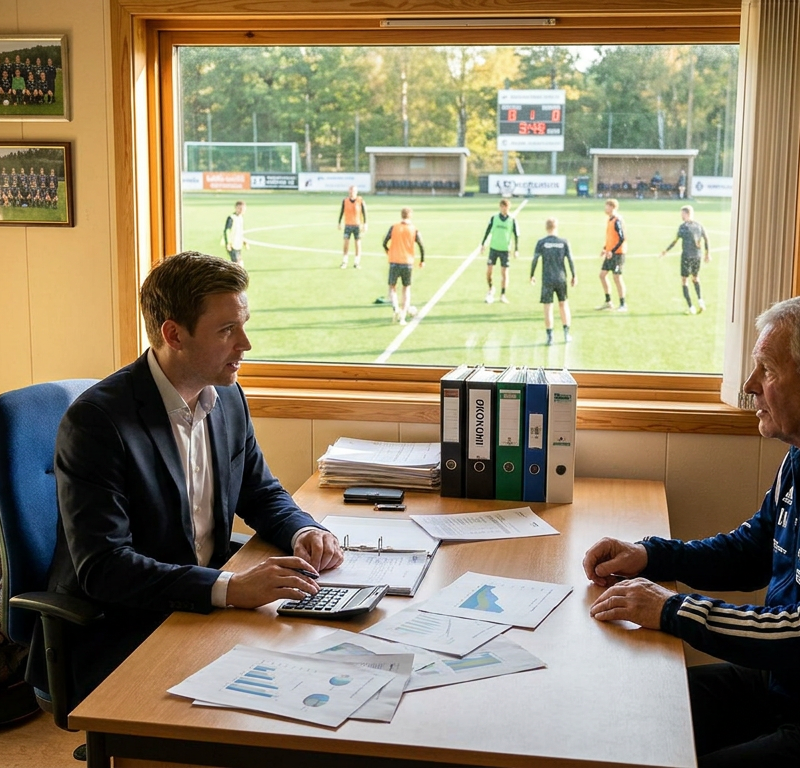
Finances are the foundation of any sports club. Without a healthy financial structure, it is difficult to realize sporting ambitions, maintain facilities, or invest in the youth department. Many clubs are run by volunteers, and that is precisely why it is crucial to have a fixed process for how income, budgets, and invoicing are handled in daily operations.
In this guide, we take a closer look at how you can optimize the association's financial processes to minimize errors and maximize the funds available for the active participants.
Create a Realistic and Dynamic Budget
A budget is not just a static document approved once a year at the general meeting. It is a management tool intended to help the board make the right decisions throughout the season. To create a budget that actually holds up, you must base it on both historical data and future ambitions.
Categorizing Income and Expenses
Start by dividing your budget into clear categories. On the income side, this could be membership fees, sponsorships, municipal grants, and income from events. On the expense side, you should distinguish between fixed costs like field rentals and insurance, and variable costs like new equipment or travel expenses for tournaments.
A classic mistake in many sports clubs is overestimating variable income. It is always better to budget conservatively with income from, for example, the concession stand or flea markets and be positively surprised, rather than ending up with a hole in the accounts at the end of the quarter.
Streamlining Invoicing and Payments
Invoicing is often one of the most time-consuming tasks for a treasurer. When hundreds of members need to pay fees at the same time, it can quickly create administrative bottlenecks. Therefore, it is necessary to have a system that supports automatic invoicing and easy payment solutions.
Automated Reminder Procedures
Outstanding payments are a strain on the club's liquidity. Instead of spending hours checking bank statements manually, you should implement a process where the system itself registers missing payments. By using automatic reminders, you ensure that members receive a friendly nudge without the treasurer having to act as the "bad guy."
It is also important to offer modern payment options. The easier it is for a member or a sponsor to pay (e.g., via MobilePay or automatic card payment), the faster the money lands in the club's account.
Handling Sponsorships and External Income
For many clubs, sponsorships constitute a significant part of the budget. But invoicing sponsors requires a different approach than membership fees. A sponsorship invoice often needs to contain specific information for the company's VAT accounting, and here, professional invoicing is essential.
Building a Sponsor Pipeline
To ensure stable finances, the club should have an overview of when various sponsorship agreements expire. By integrating your sponsor management with the financial system, you can ensure that invoices are sent out at the right time – for example, before a new season starts, so the funds are available when new clothing with logos needs to be purchased.
Remember, a professional invoice sends a signal of a professional club. Companies are more likely to support associations where they trust that the administration and financial framework are under control.
Optimizing Liquidity Management
Good finances are not just about a surplus on paper, but about having money in the bank at the times when bills need to be paid. This is called liquidity management. In a sports club, income is often seasonal – fees typically come in large chunks twice a year – while expenses run steadily throughout the year.
Create a Cash Flow Forecast
Try to plot your expected incoming and outgoing payments into a monthly plan. If you can see that you have a large expense for new balls in March but don't receive membership fees until April, you have the opportunity to act in advance. Perhaps the invoicing of members can be moved forward 14 days, or the purchase of equipment can be postponed slightly.
By keeping track of payments and ensuring timely invoicing, you avoid having to draw on an expensive credit line at the bank, which ultimately saves the club unnecessary interest expenses.
Transparency and Reporting to the Board
Healthy finances in a sports club are built on trust. The rest of the board must be able to follow how the budgeted income is progressing. Therefore, a brief status report should be prepared every month or every quarter.
Use Dashboards and Key Performance Indicators (KPIs)
Instead of presenting long Excel spreadsheets at the board meeting, it is beneficial to focus on a few key figures:
- Current balance vs. budgeted balance.
- Number of outstanding membership fees.
- Status of the year's largest events/income sources.
Digitalization Saves Hours for Volunteers
Time is one of the scarcest resources in club life. The many hours spent on manual bookkeeping, invoicing, and following up on payments could often be better spent on developing the club or training young players.
Integrated Solutions
The greatest benefits arise when your member management system "talks" to your financial system. When a new member joins, the invoice is created automatically, and when payment occurs, it is booked directly to the correct account. This reduces the risk of human error and ensures that the numbers are always up to date.
It’s not just about making life easier for the treasurer; it’s about future-proofing the club so it remains attractive for the next generation of volunteers to take over. No one wants to take over an opaque system based on handwritten notes or complex spreadsheets that only one person understands.
Final Advice for Strengthened Club Finances
Getting the club's finances in order requires a structured effort, but the rewards are significant. By focusing on precise invoicing, timely payments, and a realistic budget, you create stability behind the scenes.
Remember, finances in a sports club should never be an end in themselves. The goal is always the sport, the community, and the experiences. But a healthy and well-run economy is the tool that makes everything else possible. Start by reviewing your current processes: Where do you spend the most time manually? Where do you lack an overview? That is where you should intervene to create the best framework for your members.