Checklist for Successful Networking Meetings: From Planning to Follow-up
For many sports clubs, the business network is the very lifeblood of their economy. Today, sponsorship sales are rarely just about a logo on a jersey or a sign at the stadium; it’s about relations, business opportunities, and the value of the events the club facilitates. But how do you ensure that every single networking meeting becomes a success that members prioritize in a busy calendar?
It requires a structured approach and a keen eye for detail. To help the club's networking managers, we have gathered the ultimate checklist to lead you safely through the phases before, during, and after your events. By following these steps, you can transform your events from "just another cup of morning coffee" into an indispensable asset for local businesses.
Phase 1: Planning and the Foundation for Networking
The success of an event starts long before the guests arrive. Without a clear purpose and a tight schedule, the arrangement risks feeling unorganized, which directly reflects on the members' perception of the club's professionalism.
Define the Purpose of Your Event
Every event should have a specific focus. Should it be pure networking where participants circulate freely? Should there be a professional presentation that provides concrete knowledge to take home? Or is the purpose a "kick-off" for the season with a focus on sports? Once you know the purpose, it is easier to manage the content and align expectations with the participants.
Date, Time, and Location
Be sure to choose times that suit your target group. Many business networks have success with morning meetings (e.g., 07:30-09:00), as it doesn't take too much time away from the workday. But don't forget the value of after-work events or "business & ball" events in connection with match days. Ensure the location is easily accessible and has the necessary facilities like good coffee, stable Wi-Fi, and presentation equipment.
Digital Invitation and Registration
Make it easy to participate. Use an online registration system so sponsors can sign up with two clicks. Remember to include a participant list in the invitation or confirmation – it increases interest when members can see who they have the opportunity to network with.
Phase 2: Creating the FRAMEWORK for Good Engagement
When the day itself arrives, your role is to be a "facilitator" rather than just a host. This is where you actively help the participants' networking along.
Welcome and First Impressions
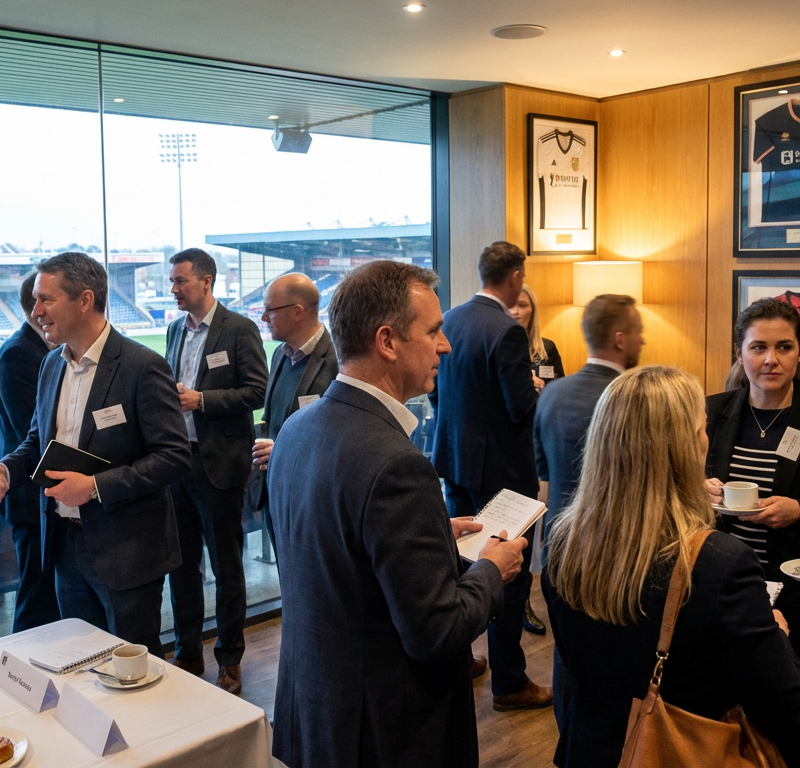
Ensure a visible representative from the club is ready at the door. Everyone should feel welcome, especially new members of the network. Hand out name tags (preferably with both name and company name), as this removes the biggest barrier to starting a conversation with a stranger.
Structured Networking
Few people are natural talents at "mingling" in a random group. Use structured methods to kickstart the conversation:
- Speed-dating: Quick 2-minute rounds where participants introduce themselves to each other in pairs.
- Topic tables: Divide the room into zones based on themes, e.g., "IT & Digitalization", "HR & Recruitment", or "Construction & Infrastructure".
- "Who are you looking for?": Let participants write on a board who they are seeking (e.g., "I am looking for contact with an accountant"), so others can help with introductions.
The Club's Role in the Presentation
If the club takes the floor, keep it short and relevant. Talk about the latest news from the locker room or the club's finances, but always remember to relate it to the partners. How does your sporting success make their sponsorship more valuable? Engagement is created when they feel like part of the team, not just a bank account.
Phase 3: Follow-up – Finding Value After Your Events
It is a classic mistake in many sports clubs: You host a fantastic event, and then the sponsors hear nothing until the invitation to the next meeting lands in their inbox. The real value of networking often occurs in the meantime.
The Quick Thanks and Wrap-up
Send an email out no later than 24 hours after the arrangement. Thank them for participating, attach any presentations from the day's speaker, and include (again) the full participant list. This gives participants the opportunity to reach out to those they didn't get a chance to speak with at the meeting itself.
Targeted Feedback
Ask your sponsors what they got out of the meeting. Was the food good? Was the presentation relevant? Did they make new contacts? Small surveys show partners that you take their time seriously and want to optimize their experience. This increases their long-term engagement and retention rate.
Facilitate "The Warm Link"
If you, as the networking manager, have heard two companies mention they could benefit from each other, take the initiative. Send an email introducing them to each other ("Hi Peter, you mentioned you needed a local carpenter – here is the contact for Søren from yesterday's meeting"). When the club creates direct business for members, the sponsorship becomes indispensable.
Checklist: 10 Quick Points for Your Next Event
- Invitation: Sent out at least 3-4 weeks in advance?
- Location: Are power, sound, and light tested beforehand?
- Catering: Is the coffee hot, and have allergies been accounted for?
- Participant list: Is it updated and ready for distribution?
- Name tags: Are they printed and readable from 1 meter away?
- Hosting: Who is standing at the door to welcome guests?
- Content: Is time allocated for both presentations and free networking?
- Call-to-action: Do participants know when the next meeting is?
- Social Media: Have photos or videos been taken for the club's LinkedIn/Facebook profile?
- Follow-up: Is the thank-you email written and ready for sending?
Turn the Network into a Professional Machine
Running a business network in a sports club requires the same discipline as the training pitch. It’s about repetition, quality, and an understanding of the members' needs. By using a fixed checklist, you ensure that the practical details are never forgotten, so you can focus on the most important thing: creating connections between people.
Remember that a network is only as strong as the relationships within it. Your events are merely the framework – your task is to fill that framework with content that creates real business value for the club's partners. When your sponsors start doing business with each other across the network, you have created a loyal ecosystem that is worth far more than just an amount on an invoice.