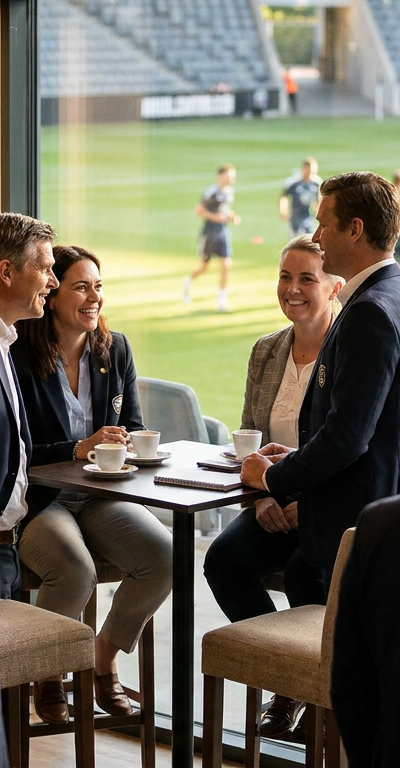
Breakfast Meetings vs. Exclusive Evening Events: Which networking format provides the most value?
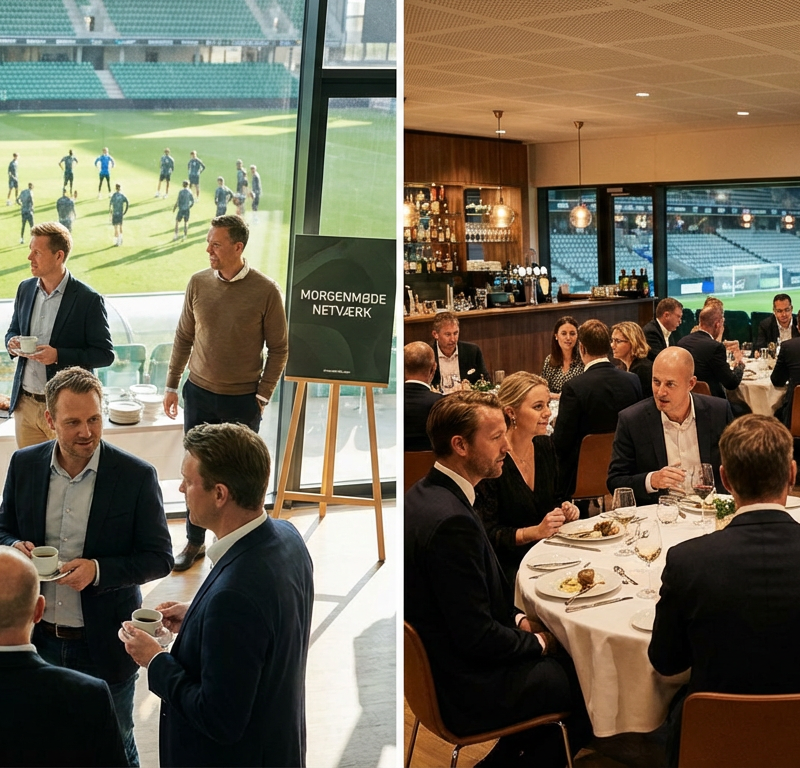
When a sports club is building a strong business network, one of the most fundamental questions is: When and how should we meet? The choice of event format has a direct impact on which types of companies participate and how deep an engagement can be expected from the members.
There is no single universal answer that fits all clubs. While the efficiency of the breakfast meeting appeals to the busy director, the more relaxed atmosphere of the evening event can open up personal relationships that are difficult to establish during the day. In this article, we compare the two dominant formats for networking and events, so your club can make the right choice for your commercial setup.
The Breakfast Meeting: Focus on efficiency and frequency
Breakfast meetings are the classic in Danish business networking. Here, people often meet early (typically between 7:00 and 9:00 AM), which means that participants can be back at the office before the workday truly picks up speed. This format is built on discipline and efficient networking.
The benefits of breakfast meetings
The biggest advantage of breakfast meetings is the participation rate. Many decision-makers prefer to get their networking activities out of the way early, as their calendars often fill up during the day. Furthermore, there is a psychological freshness in the morning that promotes focus.
- High frequency: Since breakfast meetings require less planning and budget (typically just coffee and bread), they can be held more often, which keeps your club top-of-mind.
- Structure: Breakfast meetings often follow a tight agenda with elevator pitches and fixed seating, ensuring that everyone talks to new potential partners.
- Low barrier: It is easy for a sponsor to send an employee for a couple of hours without disrupting the week's production.
The challenges of the early format
The flip side of the coin is the limited time. Conversations rarely go "deep" before the clock rings and people have to move on. Engagement can become superficial here if it is not sharply facilitated by the club.
Exclusive Evening Events: Relations and experiences
Where breakfast meetings are about efficiency, evening events are about engagement and experiences. Here, the sports club is on home turf, as you can draw on the emotions and atmosphere that the stadium or arena offers.
When does the evening format win?
If your goal is to create ambassadors rather than just sponsors, evening events are the way forward. Here, there is time for immersion, longer presentations, and, not least, social interaction. When sharing dinner or watching a match in informal settings, professional barriers are broken down.
- Social glue: Longer events create stronger bonds between members. Relationships built over dinner often last longer than those over a quick croissant.
- Partnership focus: It gives the club the opportunity to present more complex projects or provide "behind the scenes" access to coaches and players.
- Networking with an edge: You can integrate wine tasting, auctions, or external speakers, which turn the event into an experience in itself.
The challenges of the evening
The biggest downside is "family-work balance." Many sponsors prioritize their free time highly, and every time the club invites to an evening event, you are competing with family and leisure interests. Therefore, much higher quality is required to ensure attendance.
Comparison: How do you choose?
To make the decision easier, one can set up a comparison across key parameters for successful events in sports clubs.
1. Costs and logistics
Breakfast meetings are significantly cheaper to run. A club with limited resources can advantageously start here. Evening events often require top-class catering, staff, and more extensive technical setups, which increases the financial risk if sponsors fail to show up.
2. Networking quality
If your networking is primarily about Lead Generation (finding new customers), the breakfast meeting is strong because you see many different faces quickly. If, on the other hand, your network is about Strategic Partnerships (deeper collaborations), the evening format is superior, as it allows the time it takes to understand each other's business.
3. Integration with the sport
Here, the evening event wins big. It is hard to feel the excitement of the turf at 8:00 in the morning. At evening events, you can utilize the lighting, the atmosphere, and perhaps even attend a training session or a pre-match buildup, which strengthens the emotional connection to the club.
The Hybrid Model: The golden middle way
The most successful business networks in Danish sports rarely choose just one format. They use a hybrid model where regular, monthly meetings are held in the morning to ensure continuity, while major quarterly events take place in the evening.
Example of a year wheel:
- 8 x Breakfast meetings (Focus: Facilitation of warm leads and knowledge sharing).
- 2 x Large evening events (Focus: Experiences, partner introductions, and celebration).
- 2 x "Out-of-house" events (Focus: Visit to a member company).
How to increase engagement in both formats?
Whether you choose morning or evening, engagement is the keyword. The sponsor must feel that it is a "waste of time" to stay away. Here are three concrete tips:
Make networking measurable
Use a system to register attendance and prepare meetings by pairing companies that can benefit from each other. If a sponsor knows that the club has arranged an introduction to a specific buyer, they will show up – regardless of whether it is at 7:00 AM or 7:00 PM.
Involve the sporting profiles
Give your members something they cannot buy elsewhere. Let the sports director provide a brutally honest analysis of the squad or let the captain talk about leadership under pressure. This element of "insider knowledge" is unique to the world of sports and creates high value for your events.
Follow-up is crucial
The network doesn't end when the guests go home. Send an overview of the participants the next day, and potentially connect those who expressed interest in each other. The digital follow-up ensures that the value of your physical events extends into the following work week.
Conclusion
The choice between breakfast meetings and evening events depends on the club's strategy and the profile of the sponsors. Breakfast meetings build discipline and overview, while evening events build loyalty and deep relationships. By understanding the differences and potentially combining the best of both worlds, your sports club can create a network that is not just an expense for the sponsors, but an indispensable part of their business development.
Remember that the most important part of any event is hospitality. Ensure that your sponsors feel seen and heard from the moment they step through the door. Good hospitality is the foundation for all successful networking and engagement.