Best practices for modern sponsorship: From logo placement to value creation
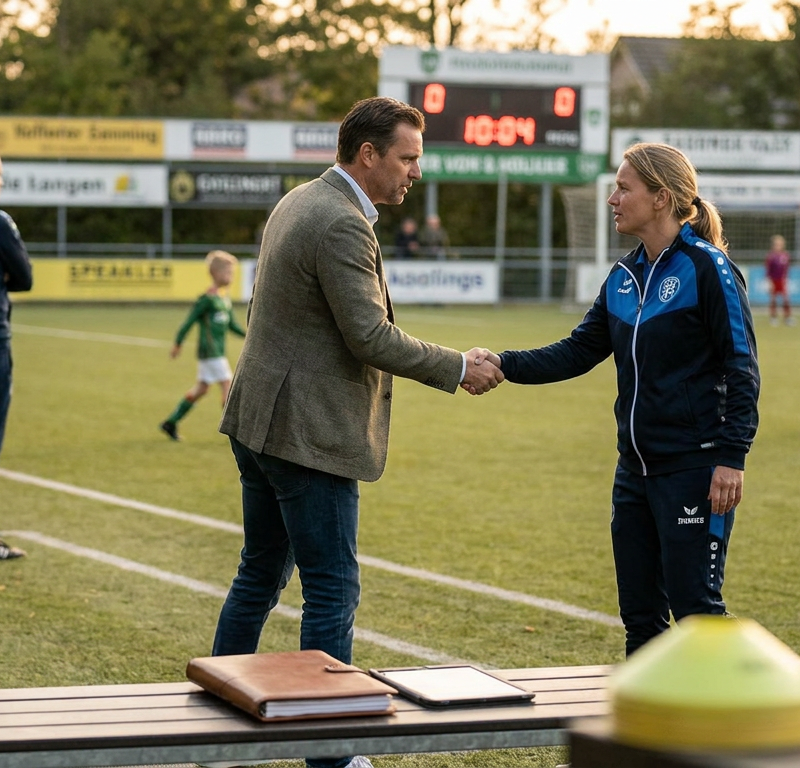
Sponsorship work in Danish sports clubs has undergone a significant transformation in recent years. Where it previously revolved around patron-style support and a logo on a sign, today's companies demand a professional approach, measurable value, and a closer relationship. To succeed with sponsorship sales today, the club must act as a professional business partner rather than an association simply asking for financial help.
In this article, we review a series of best practices that will elevate your work with sponsors to a new level. We look at how you can structure your processes so that you don't just bring in money, but build long-lasting partnerships that benefit the club, the members, and the business community alike.
Create a foundation of data-driven insight
Before you reach out to potential partners, you must know your own value. One of the biggest mistakes in modern sponsorship work is guessing what an agreement is worth. Best practice here is to collect concrete data about your reach and demographics.
How many members do you have? How many visit your facilities weekly? What is the opening rate of your newsletters, and how many followers do you have on social media? Companies today buy access to target groups, and the more precisely you can define your audience, the more attractive you are as a partner. If you can tell a local master carpenter that you have 400 parents aged 35-50 who watch two matches a week, it is far more valuable than simply promising "good exposure."
Understand the company's KPIs
When you initiate a sponsorship sale, it is crucial to understand what the company wants to achieve. Some want brand awareness, others want to recruit employees, and some wish to increase their direct sales. A professional approach involves asking questions before you present solutions. By understanding their Key Performance Indicators (KPIs), you can tailor your sponsorship agreements to solve the company's specific challenges.
Professionalizing your sponsorship sales
Sponsorship sales must never be a random activity that only takes place when the treasury is empty. It must be a continuous process. One of the best methods to ensure progress is to establish a dedicated sales team or a sponsorship committee with clear areas of responsibility.
Use a structured pipeline model. Divide your leads into "leads," "meeting booked," "offer sent," and "negotiation." By having this overview, you ensure that no potential partners fall between two stools. It sends a professional signal to the outside world when follow-up occurs exactly as agreed, and when the club appears as a streamlined organization.
Make it easy to say yes
Many clubs present complicated menus with far too many options. Best practice is to create manageable starter packages that can be expanded as needed. Make the process digital and simple. Can the sponsor sign the contract digitally? Can they easily upload their logo to your system? The fewer friction points there are in the purchasing process, the shorter the path from dialogue to signed agreement.
Sponsor management: Retaining your partners
It is always cheaper and easier to retain an existing sponsor than to find a new one. Nevertheless, we often see clubs forgetting their sponsors as soon as the ink on the contract is dry. Professional sponsor management is about being proactive throughout the entire agreement period.
Create an annual cycle for your sponsorship activities. This cycle should include regular check-in meetings, invitations to events, and times when you send documentation of the value they have received. If a company has purchased exposure on a perimeter board, send them a photo of it on a Saturday afternoon when the facility is full of people. It shows that you take their investment seriously.
The network as the core element
For many local businesses, the social and business network is the most important reason to support a sports club. Create platforms where your sponsors can meet each other. This could be morning meetings, business clubs, or exclusive events before a match. When your sponsors start doing business with each other because of the club, your partnerships become indispensable. Here, your role shifts from being a recipient of support to being a facilitator for local growth.
Integrating Corporate Social Responsibility (CSR)
Modern sponsorship work extends beyond sporting results. Companies increasingly want to be associated with clubs that take social responsibility. This is often called CSR (Corporate Social Responsibility). By integrating projects regarding, for example, inclusion, sustainability, or mental health into your partnerships, you open doors to entirely new budgets in the business world.
An example could be a collaboration with a local bank to promote financial literacy among the club's young members, or a clothing company sponsoring the recycling of sportswear. When sponsorship agreements include a dimension of community value, the partnership becomes stronger and more meaningful for both parties.
Digitalization of sponsorship work
In a busy everyday life where many tasks in sports clubs are handled by volunteers, it is essential to use digital tools to lighten the burden. Manual handling of invoicing, logo files, and contract expirations often leads to errors and lost revenue.
By using a dedicated system for sponsorship management, you can automate administrative processes. This means you always have control over which agreements need renewal, who has paid, and which counter-services have been delivered. This structure frees up time for what really matters: building relationships and creating value for your partners.
Documentation of impact
Towards the end of a sponsorship agreement, you should always present an "impact report" or a summary. What has the company gained from the year? Here you can showcase photos, number of views on social media, attendance at networking meetings, and any sporting successes they have been a part of. This documentation makes the renegotiation of the agreement much easier, as the value is there in black and white.
Summary: The path to a strong partnership
Successful sponsorship work is essentially about shifting the focus from the club's needs to the sponsor's needs. By implementing these best practices, you ensure a professional approach that builds trust in the local business community.
- Be prepared: Know your data and target audience before the first meeting.
- Be curious: Find out what the company actually wants to achieve.
- Be structured: Use systems to manage agreements and follow-up.
- Be visible: Continuously document the value you deliver to the sponsor.
- Be a bridge builder: Create networks between your partners so they gain value from each other.
When your sponsorship work is based on professionalism and real value creation, you will find that it is no longer about "selling" logos, but about entering into strategic partnerships that lift both the club and the local community toward new goals.