Best Practices for Club Administration: How to Create a Self-Running Organization
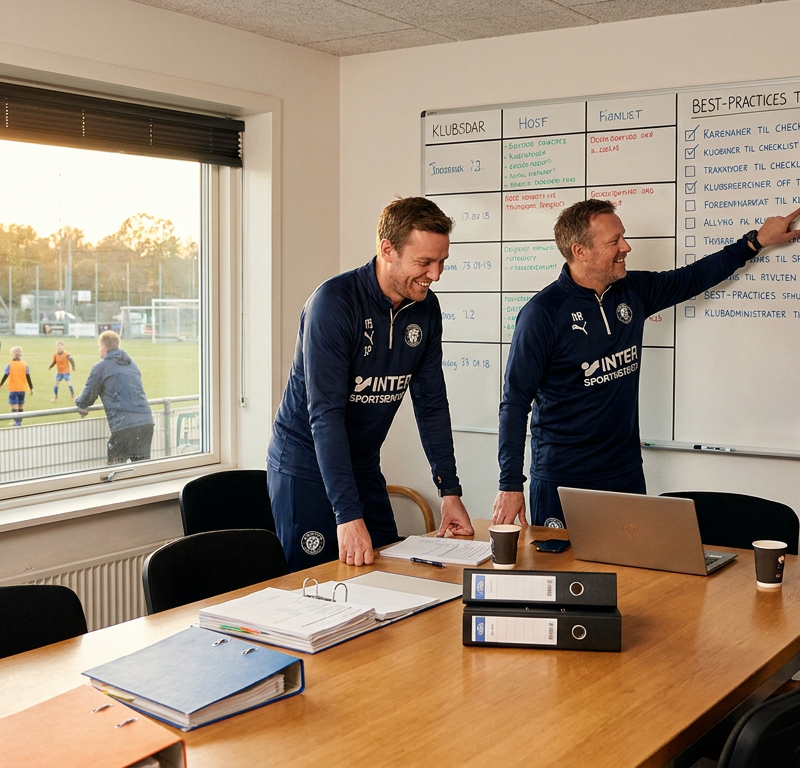
Running a modern sports club today requires much more than just knowledge of the game on the pitch. It requires a strong administrative backbone capable of handling everything from member management and finances to communication and volunteer care. When club administration functions optimally, time is freed up for what it's all about: the sport and the community.
In this article, we dive into the most effective best practices for club operations that can help your board move away from ad hoc solutions toward a structured, self-running organization.
Create a Clear Distribution of Responsibility in the Board
One of the biggest challenges in community organizations is the fluid boundaries of who does what. Often, the same small group of enthusiasts ends up handling all tasks, leading to burnout and a lack of overview. A professional approach to leadership starts with a clear distribution of roles.
Functional Descriptions Instead of Person Dependency
Instead of saying "Mark takes care of the technical stuff," the club should develop short functional descriptions for each position on the board. What is the treasurer's exact area of responsibility? Who is the contact for the municipality regarding hall bookings? By defining roles, you create a robust structure where new volunteers can take over a position more quickly because they know exactly what is expected of them.
Example: A football club in Jutland introduced "buddy systems" on the board, where each heavy position (e.g., finance) has a "shadow" who is briefed on the basic processes. This ensures continuity in club operations if a key person suddenly has to step down.
Digitization as a Foundation for Efficient Administration
The days when member lists lived in dusty ring binders or on a single failing hard drive belonging to a former chairman are over. Efficient club administration requires digital tools that centralize data and automate routine tasks.
Centralization of Data
Ensure that all relevant documents, from bylaws to sponsorship contracts and coach overviews, are stored in a shared cloud solution. This allows the entire leadership to access information regardless of time and place. It reduces the risk of important knowledge being lost during board rotations.
Automated Processes
Administering membership fee collection is often a time-sink. By implementing automatic payment systems, the club can significantly reduce the time spent on reminders and manual bookkeeping. This allows the treasurer to act more strategically regarding the club's finances rather than just being a "controller."
Recruiting and Retaining Volunteers Through Organization
Without volunteers, club operations come to a standstill. However, many clubs fail in their volunteer management because they lack a structured approach to task distribution. Best practice here is to break down large tasks into small, manageable "micro-tasks."
From "Help Wanted" to Specific Tasks
Instead of sending out an email saying "We need help with the tournament," be specific. Write instead: "We need two people to man the kiosk from 10 AM to 12 PM on Saturday." The more defined and manageable the task is, the easier it is for busy parents or members to say yes.
Recognition and Culture
Good administrative routines also include a plan for retention. Make sure to have a "volunteer policy." This can be small things like an annual volunteer party, free coffee in the hall, or apparel with the club logo. The most important thing is that volunteers feel seen and part of a professional setup.
Financial Management and Transparency
Healthy finances are a prerequisite for any club operation. Financial administration should not just be about keeping track of expenses, but about creating a foundation for growth and investment in the club's facilities or talent pool.
Budgeting and Follow-up
Create a realistic budget early in the year and perform quarterly follow-ups within the board. Use graphic overviews rather than complex Excel sheets when presenting figures to the rest of the club. Transparency creates trust with both members and potential sponsors.
Diversification of Income
Good administrative routines also involve a strategy for generating income. Are you too dependent on membership fees? A structured administration actively works with sponsorship deals, grants, and events. By having systems to track sponsorship agreements and expiration dates, you ensure that no income sources dry up unnoticed.
Communication: The Bridge Between Management and the Field
Communication is the glue in club administration. If members and coaches don't know what's going on, frustration quickly arises. Best practice here is to create fixed channels and a predictable cadence in communication.
Use the Right Channels for the Right Messages
Use social media for good stories and member engagement, but keep official club business (training times, fees, general meetings) in a closed member or administration system. This ensures that important information doesn't disappear in a Facebook algorithm.
Example: A swimming club reduced the number of questions to the board by 40% simply by introducing a monthly newsletter with "what's happening in the club right now" and an updated FAQ on their website.
Continuity: Securing Future Leadership
The biggest problem for many sports clubs is the "generational handover." When the seasoned chairman steps down after 20 years, a void is often left behind. A strong club administration accounts for this through documentation.
The Annual Cycle as a Management Tool
Develop a detailed annual cycle (year wheel) for the club administration. When should facility grants be applied for? When should coach contracts be renewed? When should new kits be ordered? An annual cycle ensures that tasks don't come as a surprise and that knowledge is automatically handed over to new board members.
Mentor Schemes in the Club
Consider letting outgoing board members serve as mentors or an "advisory board" during a transition period. This ensures that unwritten rules and good relationships with, for example, the municipality or local business owners are not lost.
Summary: The Path to a Stronger Club
Efficient club administration is not about making things more difficult, but about creating structure that makes daily life easier. By focusing on clear distribution of responsibility, digital tools, professional volunteer management, and proactive financial control, your club can move from "surviving" to "thriving."
Start small. Choose one focus area—for example, the annual cycle or role distribution—and implement it in the next quarter. Once the foundation is in place, you will find that energy returns to the sporting activities, and the club becomes a more attractive place for both members and volunteers.