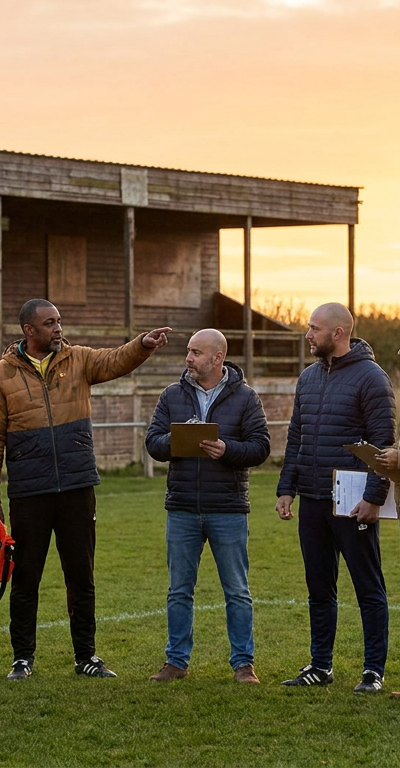
Best Practice for Volunteers and Staff: The Path to Healthy Club Management

In any modern sports club, volunteers are the foundation upon which the entire organization rests. Without a committed staff, neither the concession stand, ticket sales, nor coaching would function. However, many clubs today find it increasingly difficult to attract and, especially, retain people over time. The classic rallying cry at a general meeting is rarely enough to ensure stable personnel planning.
To create a sustainable structure, a professional approach to staff management is required—one that balances the club's needs with the volunteers' desire and time. Below, we review the key best practices that can elevate your club from ad-hoc solutions to a streamlined machine.
Define the Roles: Make It Easy to Say Yes
One of the biggest barriers to recruiting new volunteers is lack of clarity. If a parent or a member is asked if they want to "help out a bit in the club," it often sounds like an overwhelming and time-consuming task with no end date. Best practice is about making the task concrete and limited.
Create "Micro-tasks"
Instead of looking for one person to handle the entire canteen, split the role into smaller pieces. One person can handle purchasing, another for shift planning, and a third for contact with suppliers. By presenting well-defined job descriptions with an estimated time consumption, you lower the threshold for engagement. People dare to say yes when they know exactly what the expectation is.
Competence Matching
Recruitment becomes more effective when based on the volunteers' professional skills. Do you have a carpenter in the membership circle? An accountant? Or perhaps a student studying communication? By asking for help in specific professional areas, the volunteer feels valued for their expertise, rather than just being "an extra pair of hands."
Strategic Personnel Planning: From Chaos to Structure
Once the staff is in place, the operational challenge arises: scheduling. Many clubs still use Excel sheets or loose Facebook threads, which often leads to misunderstandings and a lack of overview. Strategic personnel planning is about staying ahead of the season's peaks.
Start by mapping out the club's annual cycle. When are the big tournaments? When are the sponsor events? By identifying critical times early, you can begin recruitment and shift planning several months before the need arises. This reduces stress for both management and volunteers.
Transparency in the Roster
A good shift plan must be accessible to all involved parties. When volunteers can see for themselves who they will be working with and where more staff is needed, a natural sense of responsibility is created. An open structure also makes it easier for volunteers to swap shifts with each other, saving the managers a significant administrative burden.
Digitalization of Staff Management
While the human aspect is most important, digital tools can make a noticeable difference in everyday life. A digital approach to scheduling ensures that no one forgets their appointment and that communication flows freely.
Automatic Reminders
Many cancellations or no-shows are simply due to forgetfulness. By using systems that send automatic SMS or email reminders 24 hours before a shift, you significantly reduce the risk of staff shortages. It also sends a signal that the club is professionally managed.
History and Data
Digitalization also provides the opportunity to collect data. Who has put in the most hours this year? Which shifts are the hardest to fill? By analyzing this data, the club can adjust its strategy. Perhaps the hot dog stand on pitch 3 should close a bit earlier because it’s always hard to find staff for Sunday afternoon, or perhaps the most diligent volunteers should receive special recognition.
Volunteer Culture and Retention
Recruiting is expensive and time-consuming, while retention is worth its weight in gold. It requires a conscious effort to create a culture where people want to stay year after year. Here, recognition plays the biggest role.
Feedback and Evaluation
After a large event, the staff should always be gathered—either physically or digitally—for a brief evaluation. What went well? What was difficult? When volunteers are heard and see their suggestions put into practice, they feel a greater sense of ownership over the club's success.
The Social Glue
Never forget the social aspect. For many, volunteer work in a sports club is a way to expand their network. Make sure to hold volunteer parties, communal meals, or workshops where it’s not just about survival and operation, but about fun and togetherness. A staff that knows each other socially helps each other more in pressured situations.
Onboarding: A Good Start for New Staff
When a new volunteer starts, the first 14 days are crucial. A bad start, where one feels in the way or lacks information, quickly leads to dropout. A structured onboarding process is therefore an important best practice.
- Welcome Pack: Create a simple digital folder or PDF explaining the club's values, who to contact with questions, and where to find equipment.
- Buddy System: Let new volunteers shadow a "veteran" for the first few times. This creates security and ensures knowledge sharing.
- Expectation Alignment: Have a brief chat about what the volunteer hopes to get out of their engagement. Is it personal development, social interaction, or simply supporting their child's club?
Handling Mandate and Responsibility
Many club leaders make the mistake of wanting to control everything themselves. But for a staff to function effectively, authority must be delegated. If a volunteer in the kiosk can make decisions about small purchases or offers without having to call the chairman every time, motivation and efficiency increase.
Give your core time to the strategic lines, and let operational decisions lie with those performing the tasks. It requires trust, but it is this trust that builds a strong organization where people feel like real contributors rather than just "helpers."
Summary of Best Practices
To optimize your work with volunteers and staff, you should focus on the following five points:
- Concreteness: Make tasks small, time-bound, and manageable.
- Digitalization: Use apps or platforms for rosters and communication to minimize errors.
- Social Foundation: Invest in the community so that volunteers stay for the social bond.
- Recognition: Remember to say thank you—both verbally and through small events.
- Delegation: Give volunteers responsibility and the mandate to make decisions within their area.
By implementing these methods, the club moves from struggling for survival to having a stable, motivated staff that can together lift the club to the next level. Remember that volunteering is not free labor—it is a resource that must be nurtured, led, and appreciated every single day.