Best-practice for value-adding networks and events: From passive sponsors to active ambassadors
For many sports clubs, the business network is the foundation of the club's economy. However, the value of a sponsorship today is about far more than just a logo on a jersey or a sign at the stadium. Modern companies seek relationships, business opportunities, and personal contact. To meet these needs, a strategic approach to networking and events is required, where the focus shifts from passive exposure to active value creation.
When networking meetings and events are executed correctly, sponsors are transformed from anonymous contributors into loyal ambassadors who see the club as an indispensable platform for their own growth. This article reviews the most important best practices for building a vibrant business network that delivers results in both the short and long term.
Create a clear structure for your networking meetings
Predictability is, paradoxically, one of the most important ingredients in a successful network. Business leaders have busy calendars, and they only prioritize events where they know exactly what they are getting out of their time. Therefore, your events should follow a fixed structure that participants can rely on.
Fixed intervals and known formats
Consider holding networking meetings at fixed times – for example, the first Tuesday of every month. This makes it easy for sponsors to plan ahead. Feel free to vary between three primary formats:
- Morning networking: Efficient meetings (07:30-09:00) with a focus on fast knowledge sharing and 1-to-1 dialogue before the workday truly begins.
- Company visits: Let one of your sponsors act as host. This gives the host the opportunity to showcase their expertise, while other members get a look behind the scenes at a local business.
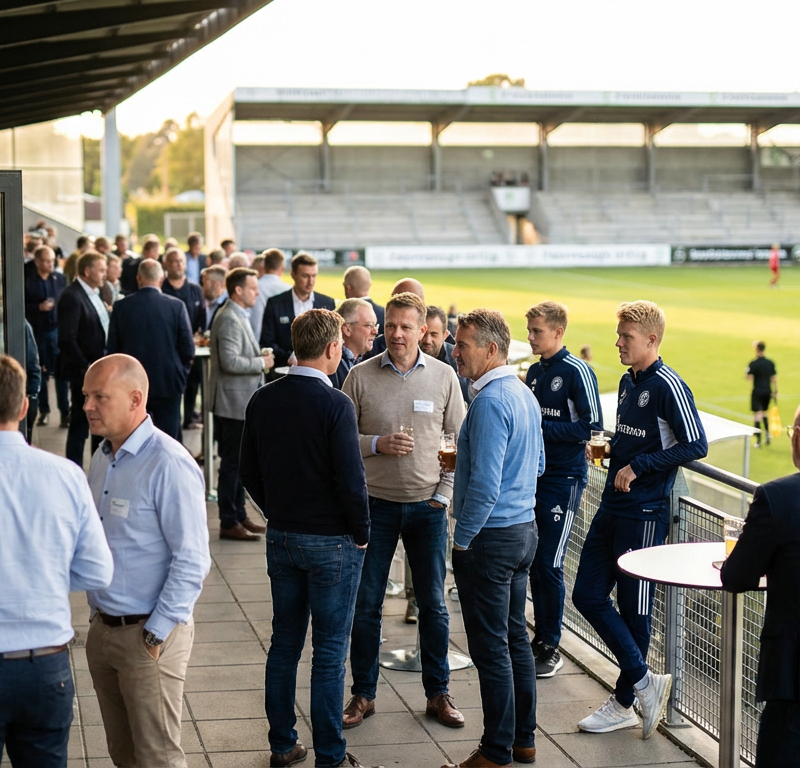
- Match-day events: Combine networking with the club's core product – the sport. Here, the social and informal aspects can take center stage, which is often where the strongest personal relationships are forged.
Facilitation is the key to true engagement
One of the biggest mistakes a sports club can make is simply putting out coffee and croissants and expecting networking to happen by itself. As a club, it is your job to facilitate contact between members. Many people – even experienced business professionals – can find it daunting to break into an established group.
The active network leader
Appoint a person in the club (or a volunteer with strong social skills) to act as a 'host'. This person must know all the sponsors' business areas. If a new master carpenter walks through the door, the host should quickly be able to connect him with the local real estate investor or architect who is also in the network.
By acting as a "matchmaker," you remove the barriers to networking and ensure that all participants leave your event feeling that they have spoken with the right people.
Use data to target your events
To optimize your events, it is necessary to understand who is coming and why they are coming. Data is not only reserved for elite sports; it is also very much a tool for administration and sponsor care.
Be sure to register attendance for all events. If an important sponsor misses three networking meetings in a row, it is a red flag that should trigger a call from the club. Perhaps the timing doesn't suit them, or maybe they don't feel they are getting enough value out of it. By being proactive, you show that you value their engagement.
Segmenting the network
Not all sponsors have the same needs. A large main sponsor might seek political influence or media exposure, while a smaller local business owner seeks direct leads. Consider dividing your events so that some are for the broad network, while others are more exclusive "Executive" dinners for the largest partners. This creates a natural incentive structure for upgrading a sponsorship.
Make networking digitally accessible
Even though physical meetings are irreplaceable, networking in a modern club should not be limited to the hours when you are physically gathered. To maintain engagement between your events, it is essential to have a digital platform.
A member list with contact information, industry categories, and photos makes it possible for sponsors to reach out to each other when the need arises in their daily lives. If a sponsor is in need of a new accountant, the first place they look should be the club's business directory. Here, the club's software plays a major role in making this information easily accessible and up-to-date.
Create content that inspires and educates
A network quickly becomes trivial if it is exclusively about "what can I sell to you?". By integrating learning and inspiration into your events, you raise the bar and give sponsors an extra reason to show up.
External speakers and local presentations
Invite external experts to give short, sharp presentations on relevant topics such as digital marketing, management, sustainability in business, or mental health. These do not need to be expensive keynote speakers; often there are experts within your own network who would love to share their knowledge for 15-20 minutes. This positions the club as a center of knowledge and not just a sports club.
Follow-up: This is where long-term loyalty is won
The most important work in connection with an event often happens after the last guest has left. A professional follow-up cements the value of the arrangement and shows that the club has control over its processes.
- "Thank you for coming" email: Send a short email the following day with a summary of the meeting, any presentations from speakers, and a participant list for those who didn't manage to get everyone's contact info.
- Evaluation: Ask two or three simple questions: Was the topic relevant? How was the catering? What can we do better next time?
- Case stories: If two companies have come together for a project through the club's network, share the story (with their permission). It shows other sponsors the concrete ROI (Return on Investment) of being part of your community.
Summary of best practices for sports clubs
Successful networks and events in the world of sports are about creating a balance between the professional business world and the unique passion that sports bring. By structuring your meetings, actively facilitating dialogue, using data for optimization, and ensuring a digital foundation, you create an ecosystem where sponsors thrive and grow.
Remember that networking is a team sport. The more the club invests in making their sponsors successful through the network, the more the sponsors will invest back into the club. It starts with the great event, but it lives on in the relationships you build every single day.